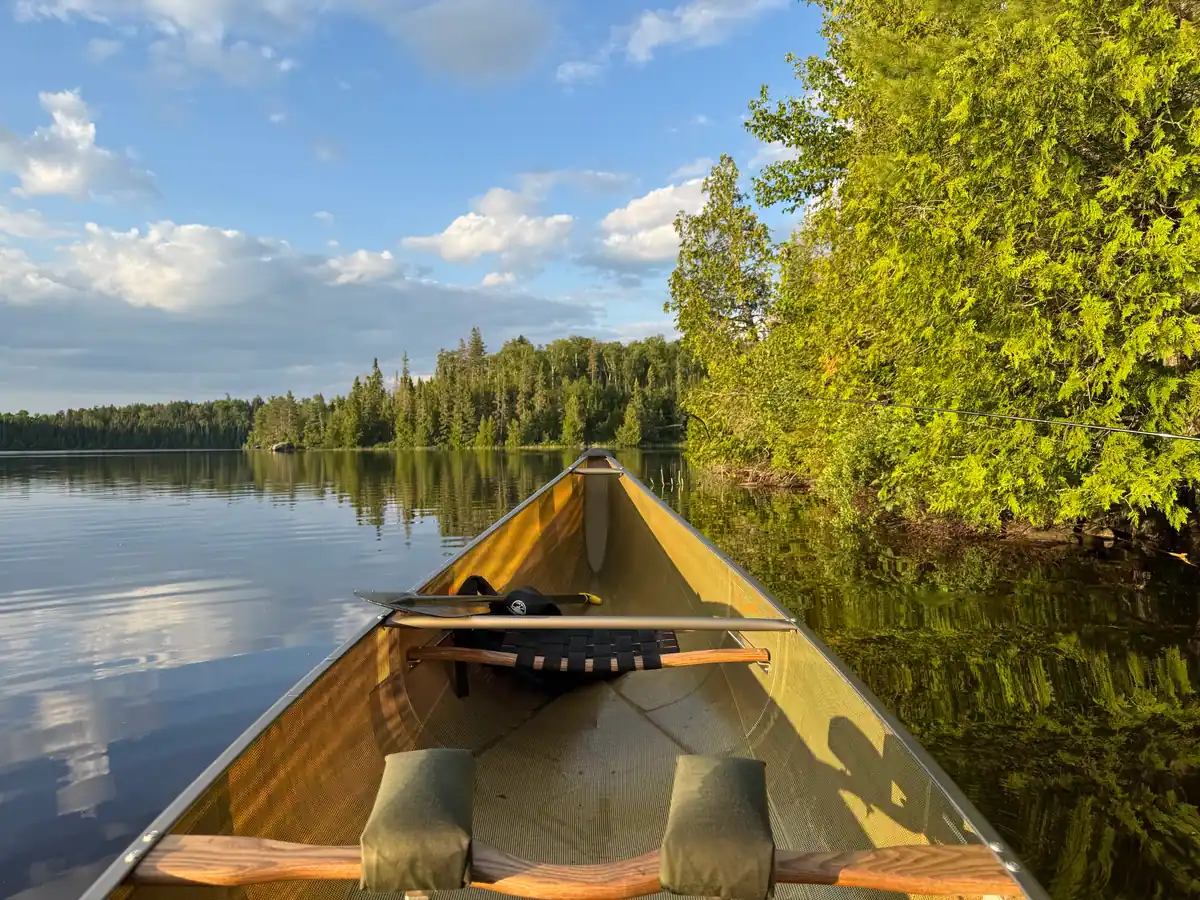
Walleye Fishing Guide
Game FishDocumented in 1,884 lakes across 3 states
The Upper Midwest’s marquee game fish, prized for its firm white fillets and low-light bite. Walleye are schooling predators with light-sensitive eyes that give them an edge in stained or choppy water.
Walleye is a primary the United States (49 states), Canada (Ontario, Québec, Nova Scotia, British Columbia and Newfoundland and Labrador), and 38 other country hubs. LakeQuality covers sport-fishing target. 1,884 lakes have an official record of the species — the actual population almost certainly extends further, since not every lake gets a full DNR fishery survey every year. With 1,201 lakes in Minnesota, 645 in Wisconsin, and 38 in Michigan carrying a documented record, Walleye is one of the more accessible targets in the dataset.
Game-fish presence on a the United States (49 states), Canada (Ontario, Québec, Nova Scotia, British Columbia and Newfoundland and Labrador), and 38 other country hubs. LakeQuality covers lake also signals enough water-quality stability to support the prey species the game fish depend on — perch, alewife, ciscoes — which themselves require reasonably oxygenated, clear water. The Walleye lakes with the lowest nutrient and algae readings tend to be the ones where the species does best, since the same water-clarity and nutrient conditions support both.
Where they live
Rock and gravel bars, points, and mid-lake structure in cool, mid-depth water; they slide shallow at dawn, dusk, and after dark to feed.
Water quality they need
Walleye tolerate more color and nutrients than trout; they actually feed better in slightly stained, wind-riled water. You’ll find them across a wide range of clarity and nutrient readings, but the healthiest fisheries sit in clear-to-moderate mesotrophic lakes with good oxygen at depth.
When to catch them
Best in spring right after ice-out near spawning rock, and again in fall as water cools; low-light and night bites are strongest all summer.
Walleye Seasonal Forecast & Techniques
Part of the LakeQuality Fishing Forecast. Spawn trigger: Spawns just after ice-out at 42–50°F over rock, gravel, and windswept shoreline. Forage: Yellow perch, shiners, and other soft-rayed baitfish. For a forecast tuned to a specific lake's measured clarity and depth, open that lake's forecast.
| Season | Where they hold | Structure & cover | Technique |
|---|---|---|---|
| Spring | shallow 3–10 ft | rock/gravel bars, warming shoreline, river mouths | jig-and-minnow, slow-rolled swimbaits |
| Summer | mid-depth 12–25 ft | main-lake points, mid-lake humps, weed edges | live-bait rigs, bottom bouncers/crawler harnesses |
| Fall | variable 8–30 ft | steep breaks and points as they feed up | jigging bigger minnows, trolling deep cranks |
| Winter / Ice | 8–25 ft | first breaks off structure, dusk feeding windows | jigging spoons and rattle baits, deadstick minnows |
Best Walleye Lakes by Water Quality
Top 50 lakes with walleye, ranked on nutrient and algae readings.
| Rank | Lake | County | State | Depth | Species |
|---|---|---|---|---|---|
| 1 | Lobster Lake | Douglas | MN | 65 ft | 18 |
| 2 | East Fox Lake | Crow Wing | MN | 65 ft | 15 |
| 3 | Deep Portage Lake | Cass | MN | 105 ft | 9 |
| 4 | Clearwater Lake | Wright | MN | 73 ft | 17 |
| 5 | Clearwater Lake | Crow Wing | MN | 54 ft | 16 |
| 6 | Clearwater Lake | Clearwater | MN | 65 ft | 14 |
| 7 | Lower Hay Lake | Crow Wing | MN | 100 ft | 21 |
| 8 | Latoka Lake | Douglas | MN | 108 ft | 16 |
| 9 | Little Birch Lake | Todd | MN | 89 ft | 20 |
| 10 | North Long Lake | Crow Wing | MN | 97 ft | 18 |
| 11 | Bad Medicine Lake | Becker | MN | 84 ft | 13 |
| 12 | Mud Lake | Becker | MN | 34 ft | 16 |
| 13 | Big Lake | Beltrami | MN | 35 ft | 17 |
| 14 | Big Lake | Sherburne | MN | 48 ft | 14 |
| 15 | Big Lake | St. Louis | MN | 22 ft | 8 |
| 16 | Big Sugar Bush Lake | Becker | MN | 42 ft | 13 |
| 17 | Pelican Lake | Otter Tail | MN | 55 ft | 20 |
| 18 | Pelican Lake | Crow Wing | MN | 104 ft | 17 |
| 19 | Birch Lake | Cass | MN | 45 ft | 14 |
| 20 | Round Lake | Aitkin | MN | 125 ft | 18 |
| 21 | Round Lake | Crow Wing | MN | 51 ft | 20 |
| 22 | Round Lake | Cook | MN | 45 ft | 5 |
| 23 | Round Lake | Becker | MN | 69 ft | 18 |
| 24 | Ada Lake | Cass | MN | 60 ft | 16 |
| 25 | Pike Lake | Cook | MN | 45 ft | 7 |
| 26 | Whitefish Lake | Crow Wing | MN | 138 ft | 23 |
| 27 | Whitefish Lake | Beltrami | MN | 30 ft | 12 |
| 28 | Horseshoe Lake | Crow Wing | MN | 56 ft | 11 |
| 29 | Farm Lake | Lake | MN | 56 ft | 12 |
| 30 | Washburn Lake | Cass | MN | 111 ft | 21 |
| 31 | Long Lake | Kandiyohi | MN | 46 ft | 15 |
| 32 | Long Lake | Clearwater | MN | 80 ft | 15 |
| 33 | Long Lake | Cass | MN | 115 ft | 14 |
| 34 | Long Lake | Beltrami | MN | 87 ft | 11 |
| 35 | Long Lake | Otter Tail | MN | 128 ft | 16 |
| 36 | Long Lake | Becker | MN | 61 ft | 16 |
| 37 | Long Lake | Hubbard | MN | 135 ft | 14 |
| 38 | Long Lake | Otter Tail | MN | 73 ft | 17 |
| 39 | Long Lake | Itasca | MN | 85 ft | 12 |
| 40 | Dead Lake | Hubbard | MN | 34 ft | 9 |
| 41 | Dead Lake | Otter Tail | MN | 65 ft | 18 |
| 42 | Unnamed Lake | Nicollet | MN | 35 ft | 6 |
| 43 | Maple Lake | Douglas | MN | 78 ft | 17 |
| 44 | Maple Lake | Itasca | MN | 39 ft | 13 |
| 45 | West Twin Lake | Cook | MN | 37 ft | 2 |
| 46 | Shallow Lake | Itasca | MN | 85 ft | 12 |
| 47 | Shallow Lake | Hubbard | MN | 10 ft | 13 |
| 48 | Trout Lake | Itasca | MN | 157 ft | 9 |
| 49 | Detroit Lake | Becker | MN | 89 ft | 19 |
| 50 | South Sturgeon Lake | St. Louis | MN | 43 ft | 10 |
Showing top 50 of 1,884 lakes with walleye.
Frequently Asked Questions
What water quality do walleye need?
Walleye tolerate more color and nutrients than trout; they actually feed better in slightly stained, wind-riled water. You’ll find them across a wide range of clarity and nutrient readings, but the healthiest fisheries sit in clear-to-moderate mesotrophic lakes with good oxygen at depth.
How many lakes have walleye?
Walleye are documented in 1,884 lakes: 1,201 in Minnesota, 645 in Wisconsin, 38 in Michigan.
What are the best lakes for walleye?
The best walleye lakes by water quality are Lobster Lake, East Fox Lake, Deep Portage Lake, Clearwater Lake, Clearwater Lake. These lakes carry the lowest nutrient and algae readings among all lakes where walleye have been documented by state DNR surveys.
What other fish are found with walleye?
Walleye are most commonly found alongside walleye, northern pike, yellow perch, bluegill, black crappie. These species share similar habitat preferences in the region's lakes.
Other Fish Species in Walleye Lakes
Found together in 1,157 lakes · 2,386 total
Found together in 1,148 lakes · 1,577 total
Found together in 1,118 lakes · 1,550 total
Found together in 1,090 lakes · 1,386 total
Found together in 1,028 lakes · 2,489 total
Found together in 961 lakes · 1,328 total
Fish species from state agency survey, stocking, and public fishing-access records; water-quality readings from the EPA National Aquatic Resource Surveys. Species profiles are general reference; always check current state regulations before fishing.