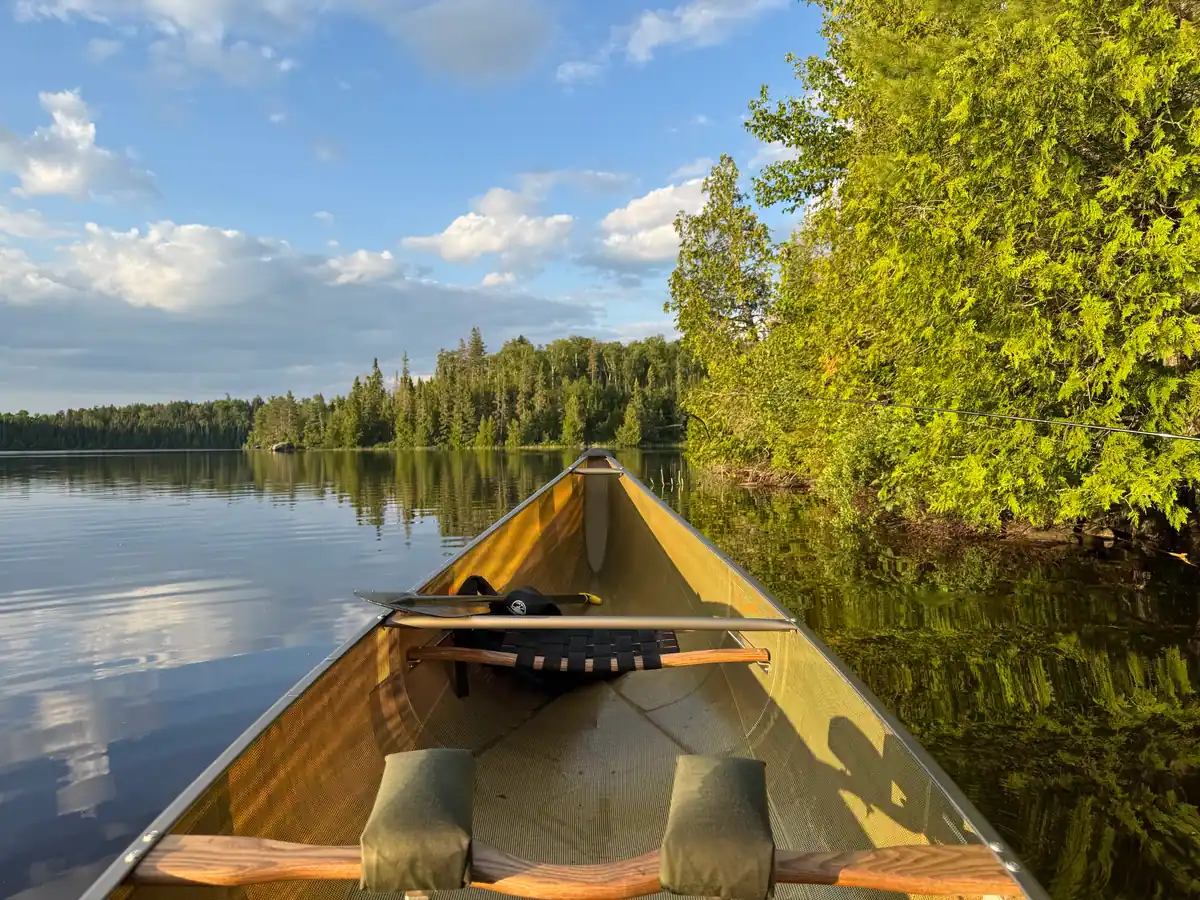
The Boundary Waters Canoe Area Wilderness holds some of the cleanest freshwater in the Lower 48 — a million-acre maze of interconnected lakes carved into ancient glacial bedrock, with little development, low nutrient runoff, and water clear enough to see 15 to 20 feet down. LakeQuality shows 221 of its lakes and entry waters with their phosphorus, nitrogen, algae, and turbidity readings, then pairs each lake with what a visitor actually needs: the permit and entry-point logistics, the fishing, and the one paradox of this pristine country, clear water with fish the Minnesota Department of Health advises eating in moderation.
Every Boundary Waters lake, mapped
221 lakes on one map. Tap any lake for its readings: clarity trend, nutrients and algae, fish species, and depth. The clearest water clusters along the interior chains.
Headline lakes
Plan your trip
Where to stay near the Boundary Waters
Cabins, resorts, and outfitter bunkhouses in the gateway towns — Ely, Grand Marais, and along the Gunflint and Sawbill trails.
Top-rated places to stay near the Boundary Waters
Prices for Oct 9–11, 4 adults. Change dates on the map below.
Availability and prices from Stay22 partners (Booking.com, Vrbo, Expedia). We may earn a commission from bookings, at no extra cost to you.
LakeQuality Lake Trip Planner (2026)
Free trip-planning guide for the Boundary Waters: how to pick a clean lake, the water-quality signals that matter, best swimming and fishing windows, and where to stay.
Keep exploring
Frequently Asked Questions
Exceptionally clean. Across 221 Boundary Waters area lakes with readings on record, 75% of the confidently-measured lakes are oligotrophic (nutrient-poor and clear), and clarity averages about 15.5 feet. These are among the cleanest lakes in the Lower 48 — a product of hard glacial bedrock, low nutrient runoff, and wilderness protection.
Many paddlers drink Boundary Waters lake water, but the U.S. Forest Service recommends filtering, boiling, or chemically treating all backcountry water to remove Giardia and other pathogens. The water-quality readings cover clarity and nutrients, not bacteria, so treat before drinking.
Yes. Overnight trips (and day-use motor entries) require a quota permit from May 1 to September 30, reserved through Recreation.gov by entry point. There are roughly 70 entry points, each with a daily quota. Outside the quota season, permits are self-issued and free.
That is a call for the Minnesota Department of Health, which puts every Boundary Waters lake under its statewide mercury fish-consumption advisory: crystal-clear water does not mean mercury-free. MDH publishes meal-frequency guidance by species and size, with stricter limits for the northeastern "Arrowhead" region.
Data: water-quality readings from the EPA Water Quality Portal; fish and morphology from the Minnesota DNR; permits and entry points from the U.S. Forest Service Superior National Forest via Recreation.gov.