Published April 28, 2026 · Updated August 18, 2026
Algae Blooms Explained: When Green Water Is Dangerous
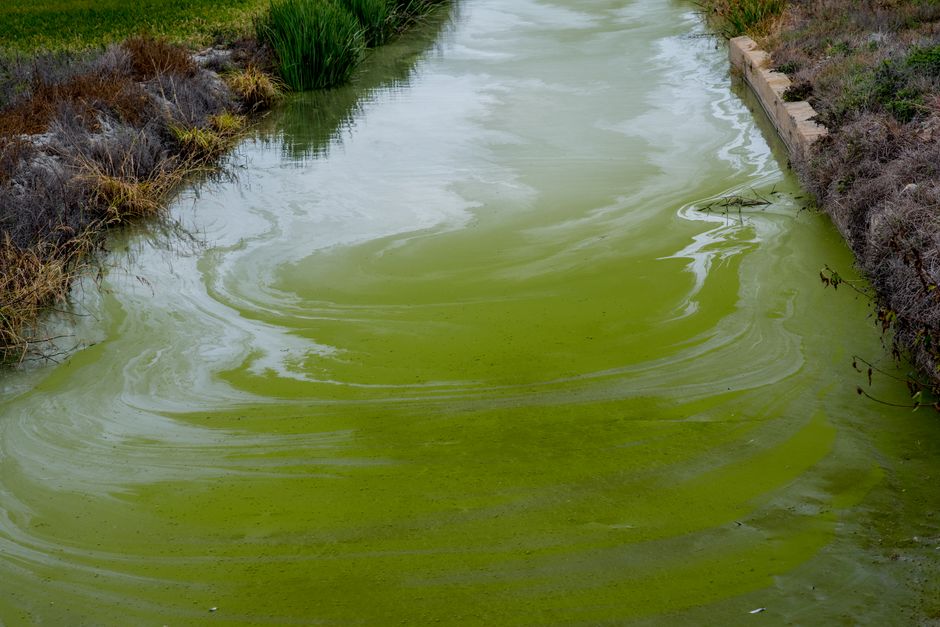
Most green water in a lake is ordinary, harmless algae. The hazard is cyanobacteria — blue-green algae — that can produce toxins. You cannot tell them apart by eye. In this dataset, Marais des Cygnes Wildlife Area Lake (KS) currently shows one of the highest chlorophyll-a readings (about 454 µg/L)— an algae-density signal, not a toxin test. Stay out of thick, scummy, paint-like green water.
Algae vs. cyanobacteria: what's the difference?
Algae and cyanobacteria are not the same thing, and the distinction is what separates a harmless green lake from a hazardous one. True algae are plant-like organisms that form the base of the food web; a light green tint from suspended algae and plankton is normal, especially in nutrient-rich lakes in summer, and is not itself a health threat. Cyanobacteria — commonly called blue-green algae — are photosynthetic bacteria that look algae-like but behave differently. Some cyanobacteria strains produce cyanotoxins, and it is these toxins, not the color, that make a bloom dangerous.
Crucially, a strain that can produce toxins does not always do so, and there is no reliable way to judge toxicity from the shore. That is why agencies use the umbrella term harmful algal bloom (HAB) and why the guidance is precautionary: treat any suspicious bloom as if it could be toxic until testing says otherwise.
What a harmful bloom looks like
A harmful cyanobacteria bloom usually has an unmistakable texture. Look for these warning signs before anyone gets in the water:
- Spilled-paint appearance — the surface looks like someone poured green, blue-green, or turquoise paint into the water.
- Pea-soup color — the whole water body turns opaque, thick, and bright green.
- Surface scum or mats — a floating skin, foam, or clumped mat, often streaking toward the downwind shore where wind pushes it into swimming areas.
- Off smell — a musty, swampy, or septic odor accompanying the discoloration.
Ordinary algae, by contrast, tends to look like a faint green haze or fine particles suspended through the water rather than a concentrated surface layer. When in doubt, apply the simple test agencies recommend: when in doubt, stay out. Clarity clues matter too — a bloom often coincides with a sharp drop in water clarity.
Health risks for people and pets
Cyanotoxins can affect the liver, nervous system, and skin. In people, exposure — through swallowing water, skin contact, or inhaling spray — can cause rashes, stomach upset, vomiting, diarrhea, headache, and eye or throat irritation; higher-dose exposures can be more serious. Children are more vulnerable because they swim in the shallows where scum concentrates and are more likely to swallow water. The CDC's harmful algal bloom guidance details symptoms and what to do after exposure.
Dogs face the greatest danger. They wade into scum-filled shallows, swallow water while swimming, and then groom toxins off their coat — and a lethal dose for a dog can be small. Poisoning can progress within minutes to hours, with drooling, vomiting, weakness, tremors, or seizures. Rinse pets with clean water immediately after a lake outing and never let them drink from or swim through visible scum. If you suspect exposure, call a veterinarian right away.
What raises the risk
Harmful blooms need three ingredients together: warm water, calm and sunny weather, and excess nutrients. Phosphorus is the key nutrient, the same one the readings track, and it enters lakes through fertilizer, manure, failing septic systems, and stormwater runoff. When a nutrient-loaded lake sits warm and still under summer sun, cyanobacteria can multiply explosively. This is the mechanism we cover in depth in why lakes turn green. It also explains the seasonality: blooms cluster in mid-to-late summer and can flare in the days after a heavy, nutrient-flushing rain.
Because phosphorus and algae drive blooms, a lake's long-term nutrient readings are a decent risk indicator — chronically eutrophic lakes bloom most. The table below shows lakes with the highest measured chlorophyll-a in our data. Chlorophyll-a is a measure of algae abundance, so a high value flags a lake prone to heavy algae growth. It is not a toxin measurement and does not confirm a bloom is present or dangerous today — always check a current advisory before you go.
| Lake | State | County | Chlorophyll-a (µg/L) |
|---|---|---|---|
| Marais des Cygnes Wildlife Area Lake | KS | Linn | 454 |
| Olson Lake | MN | Big Stone | 384 |
| Rita Blanca Lake | TX | Hartley | 345 |
| Cowley Lake | MN | Hennepin | 344 |
| Domeier Lake | MN | Brown | 332 |
| Unnamed Lake | MN | Brown | 300 |
Elevated chlorophyll-a signals algae-prone water, not a confirmed toxic bloom. These readings come from the 38,731 lakes we monitor and reflect long-term sampling, not a live advisory.
Where to check before you swim
The readings tell you a lake's long-term tendency; an advisory tells you about today. Check both. Start with our algae advisories page and your state health department's bloom reporting line before heading out, and read the algae bloom guide for identification details. For the broader picture of when a lake is safe to swim, see our swimming safety guide. And whatever the paperwork says, trust your eyes on the day: if the water looks like paint or pea soup, keep people and pets out.
Frequently Asked Questions
No. Most green tint comes from ordinary algae and plankton that pose no health risk. The danger is a specific group called cyanobacteria (blue-green algae), which can produce toxins. Because you cannot tell a toxic bloom from a harmless one by sight alone, the safe rule is to stay out of any thick, scummy, or paint-like green water.
A harmful cyanobacteria bloom often looks like spilled green or blue-green paint, pea soup, or a thick surface scum or mat, sometimes with a foul, musty smell. Streaks and clumps that collect on the downwind shore are a classic warning sign. If the water looks like that, keep people and pets out and report it to your state health department.
Yes — dogs are at higher risk than people. They swim in scum-collecting shallows and then lick the toxins off their fur, and even a small dose of cyanotoxin can be fatal to a dog within hours. Signs include vomiting, drooling, weakness, and seizures. Rinse your dog with clean water immediately after any lake swim and contact a veterinarian if symptoms appear.
Blooms are driven by three ingredients: warm water, calm sunny weather, and excess nutrients — especially phosphorus from fertilizer, manure, and stormwater runoff. That is why blooms peak in mid-to-late summer and after nutrient-loading rains. Lakes with chronically high phosphorus bloom most often.
/methodology
Related Articles
Get algae and swimming-safety alerts by email
New bloom-season guides and water-quality explainers as we publish. No spam, unsubscribe anytime.