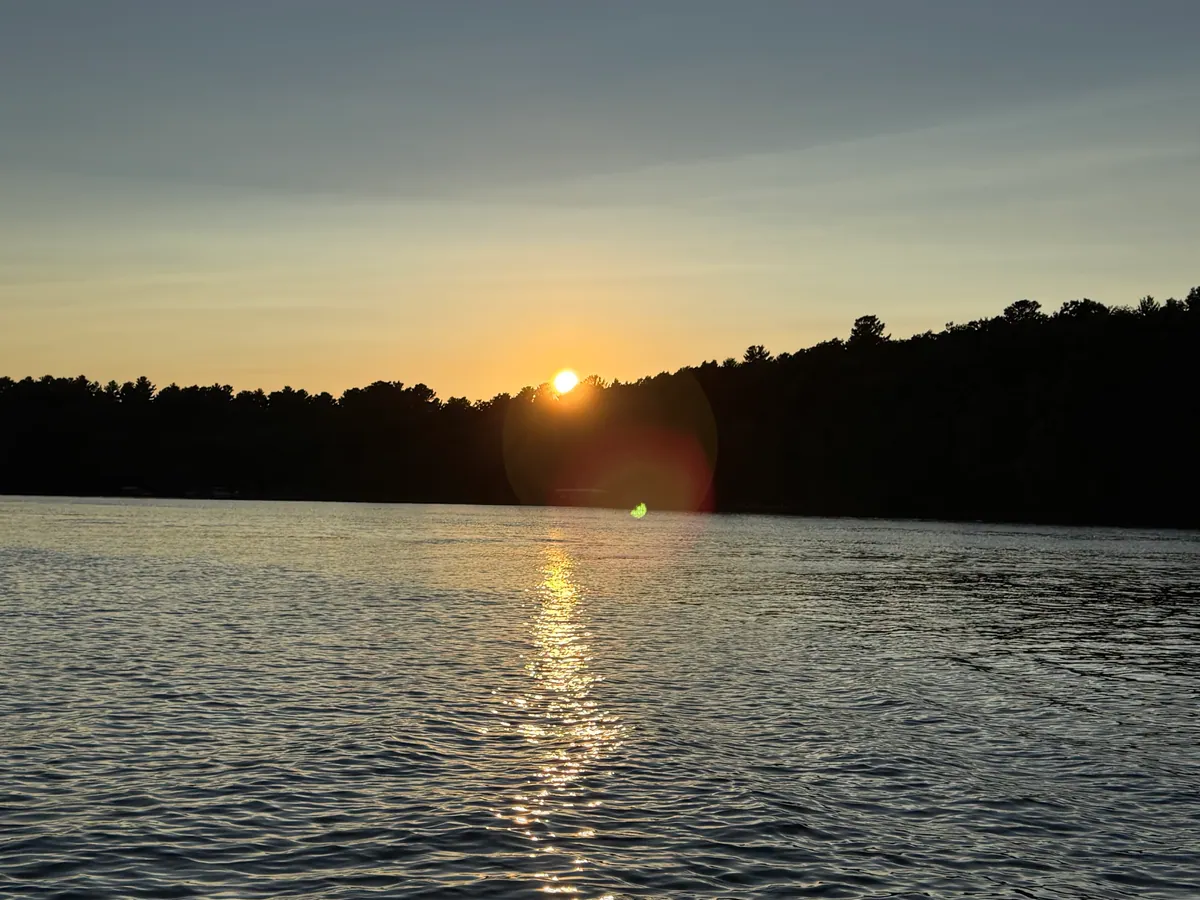
Chippewa Flowage -North of Cranberry Bars Lake vs Moose Lake
Water quality, depth, fish species, and recreation comparison.
Chippewa Flowage -North of Cranberry Bars Lake and Moose Lake read the same on nutrients and algae. Both are in Sawyer County, Wisconsin.
Chippewa Flowage -North of Cranberry Bars Lake and Moose Lake are both in Wisconsin — a same-state head-to-head where the comparison comes down to lake-specific differences in depth, watershed, and monitoring history rather than the broader state-level water-quality regime. The readings are close: Chippewa Flowage -North of Cranberry Bars Lake and Moose Lake sit within a narrow band of each other on phosphorus, chlorophyll-a and clarity. The per-parameter table below shows where the small differences actually live.
With readings this close, the choice between the two lakes turns on non-water-quality factors: depth, fish species, public access, distance from home. The per-lake pages below cover all of those.
Chippewa Flowage -North of Cranberry Bars Lake
Murky, only visible to about 4.9 ft.
Moose Lake
Very murky, less than 2 ft of visibility.
Side-by-Side Metrics
| Metric | Chippewa Flowage -North of Cranberry Bars Lake | Moose Lake |
|---|---|---|
| Water Clarity | 4.9 ft Better | 2 ft |
| Phosphorus | 32 µg/L | 28.9 µg/L Better |
| Chlorophyll-a (Algae) | 10 µg/L | No data |
| Maximum Depth | 92 ft Better | 21 ft |
| Surface Area | 14,593 acres | 1,559 acres |
| Public Access | Yes | Yes |
| Fish Species | 8 Better | 5 |
| Trophic State | eutrophic | eutrophic |
A green ✓ marks the better value for that metric (lower phosphorus / chlorophyll = cleaner; higher Secchi / depth / species count = better). Surface area and trophic state carry no tick — a bigger lake is not a better lake.
Swap a lake
Compare Chippewa Flowage -North of Cranberry Bars Lake or Moose Lake against a different lake.
Verdict
Both lakes earn the same Grade C. The tiebreakers come down to clarity (Chippewa Flowage -North of Cranberry Bars Lake: 4.9 ft, Moose Lake: 2 ft) and what you want from the lake. Chippewa Flowage -North of Cranberry Bars Lake supports more documented fish species.
Source: EPA National Aquatic Resource Surveys, 2026.