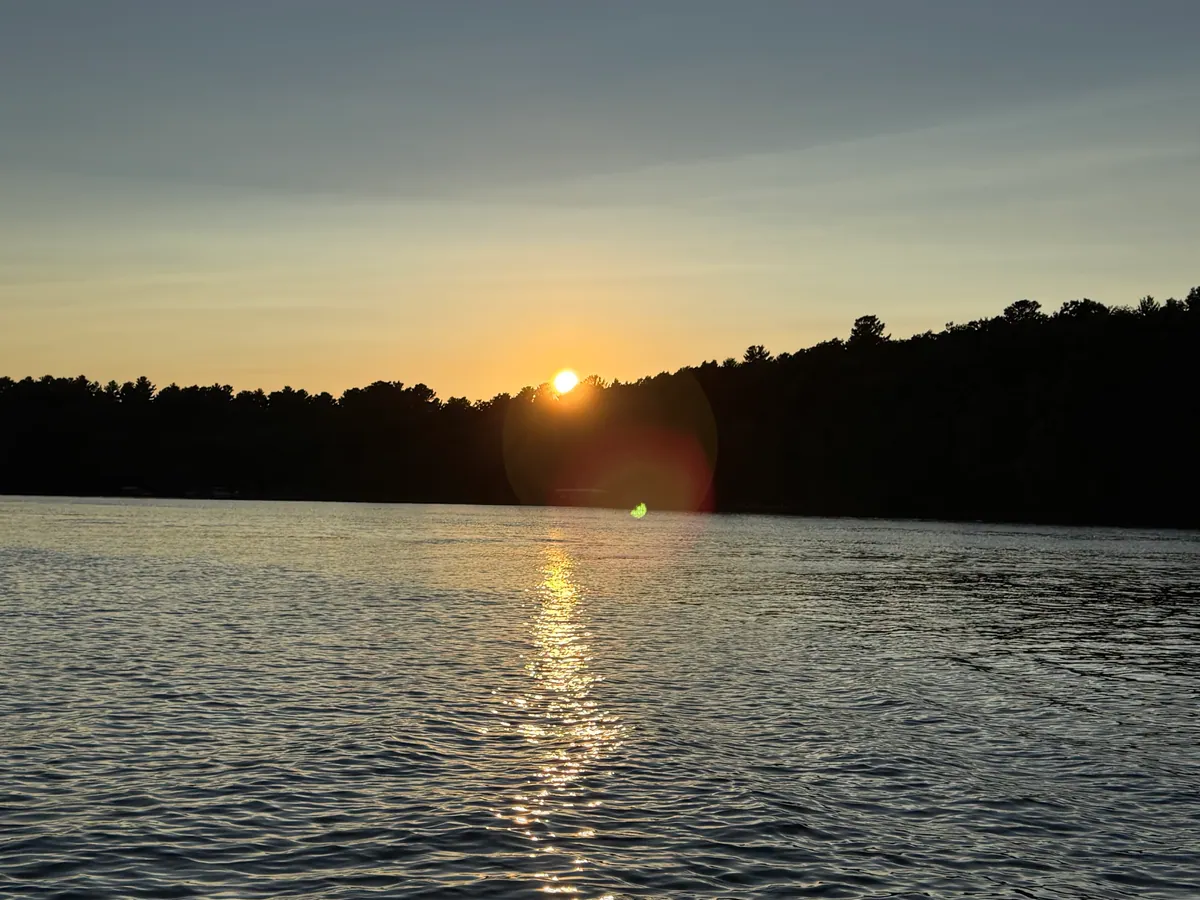
Bad Medicine Lake vs Upper Cormorant Lake
Water quality, depth, fish species, and recreation comparison.
Bad Medicine Lake reads lower on nutrients and algae than Upper Cormorant Lake. Both are in Becker County, Minnesota.
Both Bad Medicine Lake and Upper Cormorant Lake sit in Minnesota. A same-state comparison strips out the state-level water-quality regime as a variable: any differences in the readings here are about the lakes themselves, not the agencies sampling them. The readings are meaningfully apart: Bad Medicine Lake carries clearly lower phosphorus and chlorophyll-a readings than Upper Cormorant Lake. A spread that wide reflects real underlying differences, in watershed inputs, depth profiles, or monitoring rigor.
For a recreational visitor, the wider gap in the readings is decisive: Bad Medicine Lake has the lower nutrient and algae numbers. For a researcher, the gap is the interesting part: what is different about the two watersheds, and which of those differences is mutable?
Bad Medicine Lake
Crystal clear, you can see 25 ft down.
Upper Cormorant Lake
Moderate clarity, visible to about 8 ft.
Side-by-Side Metrics
| Metric | Bad Medicine Lake | Upper Cormorant Lake |
|---|---|---|
| Water Clarity | 25 ft Better | 8 ft |
| Phosphorus | 6 µg/L Better | 30 µg/L |
| Chlorophyll-a (Algae) | 1.6 µg/L Better | 9.9 µg/L |
| Maximum Depth | 84 ft Better | 29 ft |
| Surface Area | 803 acres | 974 acres |
| Public Access | Yes | Yes |
| Fish Species | 13 | 13 |
| Trophic State | oligotrophic | eutrophic |
A green ✓ marks the better value for that metric (lower phosphorus / chlorophyll = cleaner; higher Secchi / depth / species count = better). Surface area and trophic state carry no tick — a bigger lake is not a better lake.
Swap a lake
Compare Bad Medicine Lake or Upper Cormorant Lake against a different lake.
Verdict
Bad Medicine Lake reads lower on nutrients and algae than Upper Cormorant Lake. Water clarity: 25 ft vs 8 ft. For fishing diversity, Bad Medicine Lake also leads with 13 species.
Source: EPA National Aquatic Resource Surveys, 2026.