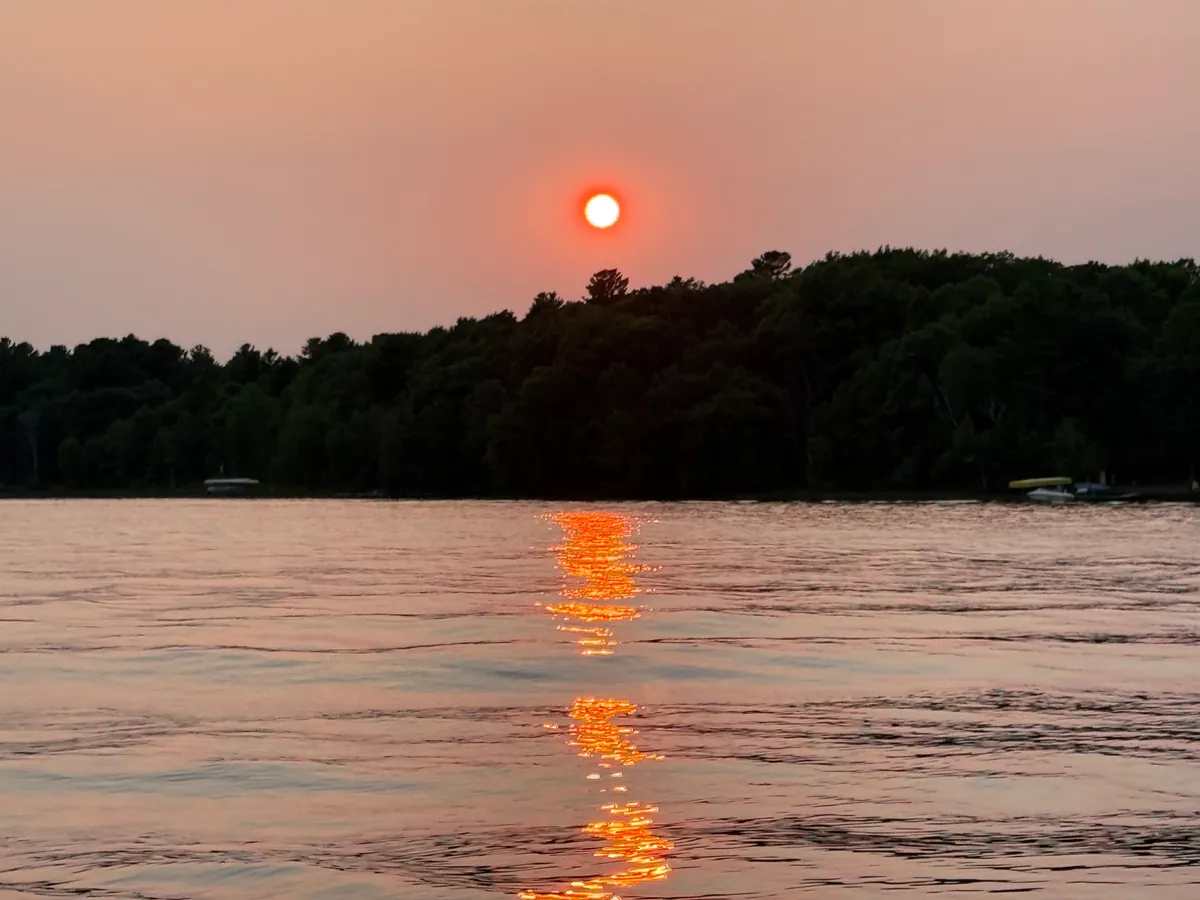
Reservoirs in North Carolina
107 of 395 measured North Carolina lakes (27%) are man-made reservoirs in the USACE National Inventory of Dams. 95 carry a High or Significant hazard rating.
Reading the North Carolina reservoir landscape
North Carolina hosts 107 man-made reservoirs in the USACE National Inventory of Dams — a dense reservoir landscape that reflects significant federal, state, and utility-led impoundment construction over the 20th century. Reservoir lakes behave differently than natural lakes: water levels are managed for the dam's primary purpose, residence time depends on inflow and release schedules, and depth profiles follow the original river-valley topography rather than the bowl shape of glacial lakes.
Recreation is the headline purpose for the largest share of North Carolina's reservoirs — lakes where the dam exists explicitly to create surface water for fishing, boating, and adjacent shoreline development. Pool levels are typically maintained more stably than at flood-control or hydro reservoirs, which supports fixed-dock access, consistent boat ramps, and the kind of shoreline economy that natural-lake counterparts in the state share.
The USACE National Inventory of Dams (NID) catalogs every dam in the United States above a size threshold — typically 25 feet in height or 50 acre-feet in maximum storage, plus all dams classified as high-hazard regardless of size. The reservoir records below pull NID fields (year built, hazard class, maximum storage, surface area at normal pool, dam length, primary purpose) and pair them with water-quality data where the impoundment also appears in EPA's lake-monitoring inventory.
Why these North Carolina reservoirs were built
All 107 North Carolina reservoirs (by surface area)
| Reservoir | County | Surface area | Year built | Purpose | Hazard |
|---|---|---|---|---|---|
| Lake Gaston | Northampton | 20,300 ac | 1963 | Hydroelectric | High |
| High Rock Lake | Davidson | 15,180 ac | 1927 | Hydroelectric | High |
| B Everett Jordan Lake | Chatham | 13,940 ac | 1974 | Flood Risk Reduction | High |
| Fontana Lake | Graham | 10,290 ac | 1944 | Flood Risk Reduction | High |
| Hiwassee Reservoir | Cherokee | 5,870 ac | 1940 | Flood Risk Reduction | High |
| Roanoke Rapids Lake | Halifax | 4,600 ac | 1955 | Hydroelectric | High |
| Hyco Lake | Person | 4,015 ac | 1963 | Recreation | High |
| Belews Lake | Stokes | 3,863 ac | 1972 | Other | High |
| Mountain Island Lake | Gaston | 3,235 ac | 1923 | Hydroelectric | High |
| Randleman Lake | Randolph | 3,070 ac | 2002 | Recreation | High |
| Santeetlah Lake | Graham | 2,884 ac | 1928 | Hydroelectric | High |
| Mayo Reservoir | Person | 2,800 ac | — | Flood Risk Reduction | High |
| Tuckertown Reservoir | Rowan | 2,560 ac | 1962 | Hydroelectric | High |
| Blewett Falls Lake | Anson | 2,560 ac | 1912 | Hydroelectric | High |
| Lake Cheoah | Graham | 1,767 ac | 1919 | Hydroelectric | High |
| Lake Townsend | Guilford | 1,635 ac | 1969 | Recreation | High |
| Nantahala Lake | Macon | 1,605 ac | 1942 | Hydroelectric | High |
| Thorpe Reservoir | Jackson | 1,462 ac | 1941 | Hydroelectric | High |
| Coddle Creek Reservoir | Cabarrus | 1,300 ac | 1993 | Water Supply | High |
| Sutton Lake | New Hanover | 1,185 ac | 1972 | Other | Low |
| Center of Sutton Lake | New Hanover | 1,185 ac | 1972 | Other | Low |
| Lake Mackintosh | Guilford | 1,125 ac | 1992 | Other | High |
| Apalachia Lake | Cherokee | 1,100 ac | 1943 | Hydroelectric | High |
| Tar River Reservoir | Nash | 1,000 ac | 1971 | Other | High |
| Lookout Shoals Lake | Catawba | 835 ac | 1915 | Hydroelectric | High |
| Lake Brandt | Guilford | 817 ac | 1960 | Recreation | High |
| Merchants Millpond | Gates | 760 ac | — | Fish and Wildlife Pond | High |
| Lake Burlington | Alamance | 757 ac | — | Other | High |
| Lake Lure | Rutherford | 740 ac | 1927 | Hydroelectric | High |
| Reidsville Lake | Rockingham | 680 ac | 1974 | Water Supply | High |
| Lake Thom-A-Lex | Davidson | 650 ac | 1957 | Water Supply | High |
| Lake Wheeler | Wake | 560 ac | 1956 | Recreation | High |
| Little River Reservoir | Durham | 550 ac | 1984 | Flood Risk Reduction | High |
| Bear Creek Reservoir | Jackson | 476 ac | 1954 | Hydroelectric | High |
| Lake Crabtree | Wake | 473 ac | 1988 | Flood Risk Reduction | High |
| Lake Julian | Buncombe | 470 ac | 1962 | Hydroelectric | High |
| Lake Benson | Wake | 463 ac | 1952 | Other | High |
| Lake Michie | Durham | 460 ac | 1926 | Other | High |
| Lake Adger | Polk | 438 ac | 1925 | Hydroelectric | High |
| Farmer Lake | Caswell | 390 ac | 1983 | Flood Risk Reduction | High |
| Lake Butner | Granville | 340 ac | — | Recreation | High |
| Burnett Reservoir | Buncombe | 334 ac | 1954 | Water Supply | High |
| Lake Twitty | Union | 327 ac | 1973 | Water Supply | High |
| Salem Lake | Forsyth | 297.5 ac | 2012 | Recreation | High |
| Lake Summit | Henderson | 290 ac | 1920 | Hydroelectric | High |
| West Fk Eno R Reservoir | Orange | 271.5 ac | 2000 | Water Supply | High |
| Kannapolis Lake | Rowan | 267 ac | 1940 | Water Supply | High |
| Back Creek Lake | Randolph | 236 ac | 1947 | Other | High |
| Lake Higgins | Guilford | 226 ac | 1956 | Recreation | High |
| Lake Isaac Walton | Person | 224 ac | 1955 | Recreation | High |
| University Lake | Orange | 213 ac | 1932 | Water Supply | High |
| Falls Lake | Montgomery | 204 ac | 1919 | Hydroelectric | High |
| Lake Junaluska | Haywood | 195 ac | 1913 | Recreation | High |
| Lake Tabor | Columbus | 172 ac | 1999 | Recreation | High |
| Lake Fisher | Cabarrus | 169 ac | 1948 | Water Supply | High |
| Lake Hunt | Rockingham | 160 ac | 1966 | Recreation | High |
| Lake Johnson | Wake | 147.5 ac | 1914 | Water Supply | High |
| Lake Orange | Orange | 140 ac | 1969 | Water Supply | High |
| Lake Lee | Union | 122 ac | 1925 | Other | High |
| Lake Monroe | Union | 118 ac | 1955 | Recreation | High |
| Rocky River Reservoir | Chatham | 100 ac | 1961 | Other | Low |
| Sunset Lake | Wake | 98.1 ac | 1923 | Recreation | High |
| Sandy Creek Reservoir | Randolph | 90 ac | — | Water Supply | High |
| Lake Raleigh | Wake | 88.1 ac | 1914 | Flood Risk Reduction | High |
| Lake Concord | Cabarrus | 84 ac | 1926 | Recreation | High |
| Lake Wilson | Wilson | 81.2 ac | 1960 | Water Supply | High |
| City Pond | Anson | 80 ac | 1920 | Recreation | High |
| Roberdel Lake | Richmond | 80 ac | — | Hydroelectric | Significant |
| Allen Creek Reservoir | Haywood | 76.4 ac | 1982 | Flood Risk Reduction | High |
| Limestone Lake | Duplin | 69 ac | 1993 | Flood Risk Reduction | High |
| Hope Mills Lake | Cumberland | 68 ac | 1921 | Recreation | High |
| Old Town Reservoir | Moore | 61 ac | 1924 | Recreation | High |
| Bass Lake | Wake | 58.6 ac | 1900 | Recreation | High |
| Water Lake | Richmond | 56 ac | 1908 | Recreation | High |
| Sycamore Lake | Wake | 55 ac | 1955 | Recreation | Low |
| Lake Sequoyah | Macon | 54 ac | 1926 | Hydroelectric | High |
| Wake Forest Reservoir @ Dam | Wake | 54 ac | 1960 | Recreation | High |
| Hamlet City Lake | Richmond | 45 ac | 1934 | Other | High |
| Beetree Reservoir | Buncombe | 41 ac | 1927 | Water Supply | High |
| Wolf Creek Reservoir | Jackson | 40 ac | 1955 | Hydroelectric | High |
| Kernersville Lake | Forsyth | 40 ac | 1952 | Water Supply | High |
| Pages Lake | Moore | 34 ac | 1945 | Recreation | High |
| Big Lake | Wake | 25 ac | 1940 | Recreation | Low |
| Bunch Lake | Randolph | 25 ac | 1942 | Water Supply | High |
| Bessemer City Lake | Gaston | 25 ac | 1955 | Water Supply | High |
| Asu Lake | Watauga | 22 ac | 1974 | Water Supply | High |
| Turner Reservoir | Chatham | 18 ac | 1953 | Recreation | Low |
| Newton City Lake | Catawba | 15 ac | 1936 | Water Supply | High |
| Hanging Rock Lake | Stokes | 11.9 ac | 1938 | Recreation | High |
| Glenville Lake | Cumberland | 11 ac | 1909 | Water Supply | High |
| Carthage City Lake | Moore | 9 ac | 1945 | Water Supply | Low |
| Cliffs of the Neuse Lake | Wayne | 8.5 ac | 1951 | Recreation | Low |
| Reedy Creek Lake | Wake | 7.5 ac | 1955 | Recreation | Low |
| Buckeye Lake | Watauga | 6.5 ac | 1987 | Water Supply | High |
| Blowing Rock Town Pond | Watauga | 5.7 ac | 1958 | Water Supply | High |
| Corporation Lake | Orange | 5 ac | 1968 | Other | Low |
| Kings Mountain Reservoir | Cleveland | 0.4 ac | — | Recreation | Significant |
| Buckhorn Dam Lake | Chatham | — | 1915 | Other | Low |
| Greenfield Lake | New Hanover | — | 1800 | Recreation | Low |
| Chatuge Lake | Clay | — | 1942 | Flood Risk Reduction | High |
| Wiggins Mill Reservoir | Wilson | — | — | Other | Significant |
| Lake Ben Johnson | Orange | — | 1955 | Other | Significant |
| Buckhorn Reservoir | Wilson | — | — | Water Supply | High |
| Lake Rogers | Granville | — | — | Recreation | High |
| Apex Reservoir | Wake | — | 1968 | Recreation | High |
| Lake Hampton | Yadkin | — | 2010 | Flood Risk Reduction | High |
| Lake Devin | Granville | — | — | Water Supply | High |
Frequently Asked Questions
How many reservoirs are in North Carolina?
107 of 395 measured North Carolina lakes (27%) are man-made reservoirs in the USACE National Inventory of Dams. 95 are rated High or Significant hazard, meaning failure would put downstream lives or property at substantial risk. The oldest matched dam dates to 1800.
What's the largest reservoir in North Carolina?
The largest matched reservoir in North Carolina is Lake Gaston in Northampton County at 20,300 acres of normal surface area, impounded by the Gaston (completed 1963).
What's the difference between a reservoir and a natural lake?
A reservoir is a body of water impounded by a man-made dam — typically built for flood control, hydroelectric power, water supply, irrigation, or recreation. A natural lake formed without human intervention, usually from glacial scouring, volcanic activity, or river meandering. Reservoirs typically have shoreline that fluctuates with seasonal water level management, while natural lakes have more stable shorelines. The USACE National Inventory of Dams classifies every regulated dam in the United States, which is how we identify which LakeQuality lakes are actually reservoirs.
What does the hazard class mean?
USACE assigns each dam a hazard potential classification based on what would happen downstream if the dam failed — NOT how likely the dam is to fail. "Low" hazard means dam failure would cause no probable loss of life and only low economic loss. "Significant" means probable loss of life is unlikely but appreciable economic damage would occur. "High" means probable loss of life and significant economic damage. The classification is about consequence, not condition. Many High-hazard dams are perfectly safe; they're rated High because populated areas have grown downstream over time.
Where does this reservoir data come from?
Every reservoir record on this page is matched to the USACE National Inventory of Dams (NID), the federal database of all dams ≥25 ft tall or impounding ≥50 acre-feet, plus any dam that poses a Significant or High hazard regardless of size. The NID is published by the U.S. Army Corps of Engineers and updated annually. Surface area, storage capacity, dam height, and hazard classification come directly from NID records.
Where to stay near North Carolina reservoirs
Compare cabins, lodges, and vacation rentals near the largest reservoirs in North Carolina — live availability and prices for boating, fishing, and lake trips.
Top-rated places to stay near North Carolina reservoirs
Prices for Oct 23–25, 4 adults. Change dates on the map below.
Availability and prices from Stay22 partners (Booking.com, Vrbo, Expedia). We may earn a commission from bookings, at no extra cost to you.
Planning a trip to North Carolina reservoirs?
Get lake water-quality updates plus the best cabin & lodging deals near North Carolina reservoirs — straight to your inbox. No spam, unsubscribe anytime.
More on reservoirs and water quality
Dam-built reservoirs and natural lakes compared side by side on the same nutrient and algae measurements — the gap, the reasons behind it, and the exceptions.
Surveyed maximum depth against nutrient and algae readings: the pattern, the shallow lakes that still read clean, and why land use beats bathymetry.
How nutrient and algae readings are read against EPA ecoregion condition classes, what each class means in the water, and why a clean reading is not a clearance.
How phosphorus and nutrient runoff drive algae growth and turn lakes green, where the nutrients come from, and what it means for a lake’s readings.
Data source
Reservoir data from the USACE National Inventory of Dams (NID), the federal database of all regulated dams. Dam attributes (height, year completed, storage capacity, hazard class) are matched to LakeQuality lakes by proximity and dam-name similarity. Some lakes may be reservoirs that aren't matched if the dam record uses a name substantially different from our lake name.