Published April 14, 2026 · Updated August 18, 2026
Do Deeper Lakes Have Better Water Quality?
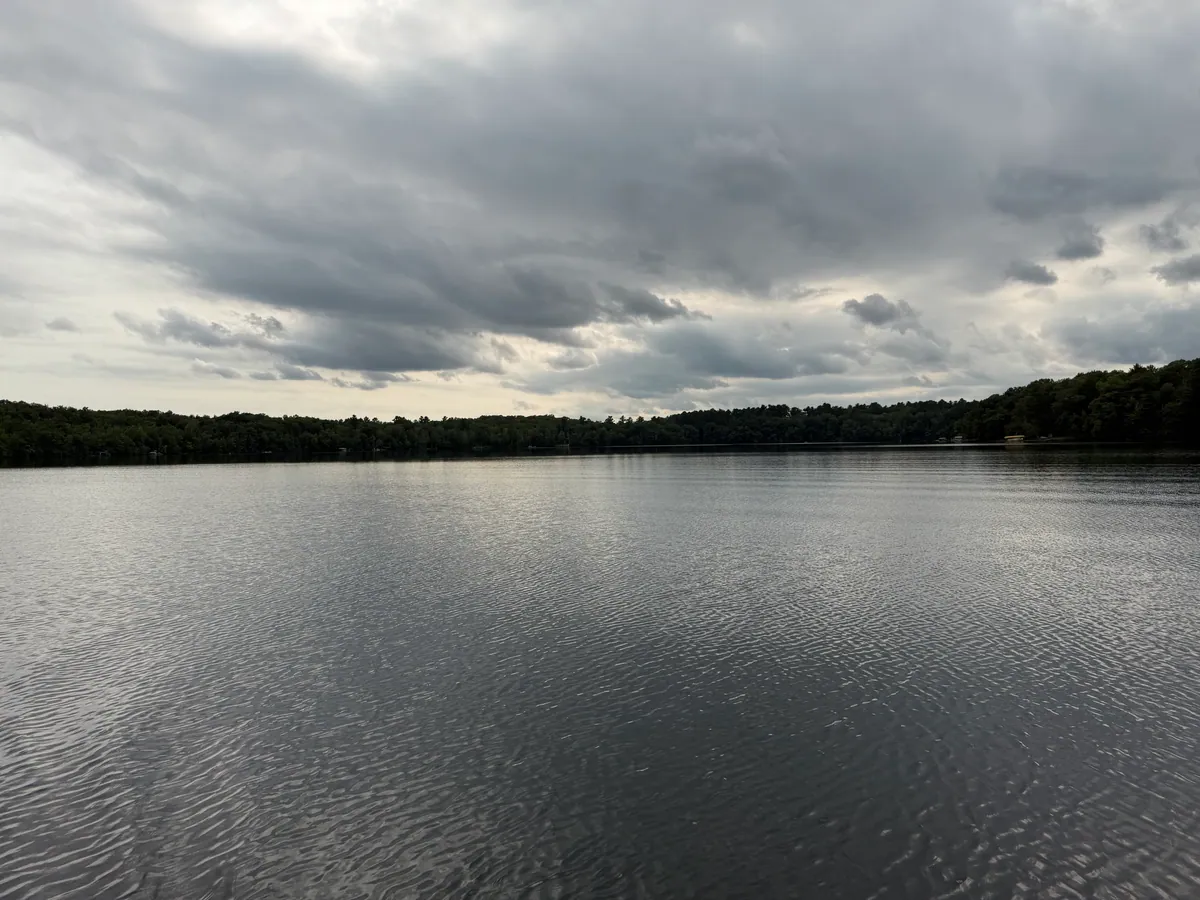
Deeper lakes read cleaner on average. Across 10,985 lakes with a surveyed maximum depth, the share sitting in EPA's favourable condition classes rises from 18% under 10 feet to 83% past 200 feet. The exceptions are the useful part.
The pattern in the surveyed set
This is not every lake LakeQuality measures. Water-quality coverage spans the United States (49 states), Canada (Ontario, Québec, Nova Scotia, British Columbia and Newfoundland and Labrador), and 38 other country hubs.; surveyed bathymetry does not. The table uses only state DNR maximum depths that survive the plausibility check (a max shallower than the lake's own Secchi reading is dropped). HydroLAKES model depths stay out. The states with enough surveyed maxima to show up here: Alabama, Arkansas, Arizona, Colorado, Florida, Georgia, Iowa, Idaho, Illinois, Indiana, Kansas, Kentucky, Massachusetts, Michigan, Minnesota, Missouri, Montana, North Carolina, North Dakota, Nebraska, New Mexico, Nova Scotia, Nevada, New York, Ohio, Oklahoma, Oregon, Pennsylvania, South Dakota, Tennessee, Texas, Utah, Virginia, Washington, Wisconsin, Wyoming.
The mean is computed on sampled lakes only. Lakes without readings are counted in the lake column and are not treated as zeros: unknown is not poor. How the condition class is assigned is in Lake Water Quality Explained.
| Depth range | Lakes | % in EPA's favourable classes |
|---|---|---|
| Under 10 ft | 1,434 | 18% |
| 10–25 ft | 3,392 | 41% |
| 25–50 ft | 4,036 | 63% |
| 50–100 ft | 1,802 | 79% |
| 100–200 ft | 269 | 86% |
| 200+ ft | 52 | 83% |
Why depth helps — until it doesn't
A deep lake stratifies in summer. Cold, relatively nutrient-poor water sits below the thermocline instead of mixing into the photic zone every windy afternoon. Volume also dilutes the same shoreline load. And many of the deepest basins in this set sit in northern forest, not southern till plains, so the depth column is partly a land-use column in disguise. The National Lakes Assessment makes the same regional point with ecoregion reference lakes: a prairie lake and a Shield lake are not supposed to look the same.
There are clear counterexamples. Silver Creek Estuary Lake (WI) has a surveyed maximum of 236 feet and still reads poorly on nutrients, with phosphorus around 126 µg/L. Depth did not save it from its watershed.
The other direction exists too. Horseshoe Lake (MN) is 12 feet at the deepest surveyed point and still reads clean. A protected, low-nutrient shallow lake is allowed to be clear. The usual warning about shallow water is a probability, not a sentence.
How to use this without cargo-culting depth
Cabin hunting: a 50-foot basin is a better starting filter than a 8-foot one, all else equal. Trip planning: still read the numbers, the trend, and the algae advisory. The national depth roundup that puts grades next to the deepest basins is Deepest Lakes We Measure. Browse deep lakes and shallow lakes, or the live deepest ranking.
Frequently Asked Questions
On average, yes — in this dataset of 10,985 lakes with a surveyed maximum depth. The share in EPA's favourable condition classes rises from 18% for lakes under 10 feet to 83% for lakes over 200 feet. Depth improves the odds. It does not decide the water.
A heavy watershed load can overwhelm volume. Agricultural runoff, stormwater, and internal phosphorus loading still fertilize a deep basin. Depth is a physical buffer, not a filter on land use.
Only surveyed maximum depths from state bathymetry — currently 10,985 lakes in Alabama, Arkansas, Arizona, Colorado, Florida, Georgia, Iowa, Idaho, Illinois, Indiana, Kansas, Kentucky, Massachusetts, Michigan, Minnesota, Missouri, Montana, North Carolina, North Dakota, Nebraska, New Mexico, Nova Scotia, Nevada, New York, Ohio, Oklahoma, Oregon, Pennsylvania, South Dakota, Tennessee, Texas, Utah, Virginia, Washington, Wisconsin, Wyoming. HydroLAKES model depths are excluded. A modelled number does not belong in a table that claims to be a measurement.
Our national roundup pairing depth with water-quality readings covers them state by state, and our deepest-lakes ranking updates as new survey depths arrive.
/methodology
Related Articles
Get more lake water-quality guides by email
New guides on depth and water quality as we publish. No spam, unsubscribe anytime.