Published February 24, 2026 · Updated August 18, 2026
Lakes with the Worst Water Quality in the U.S. (2026)
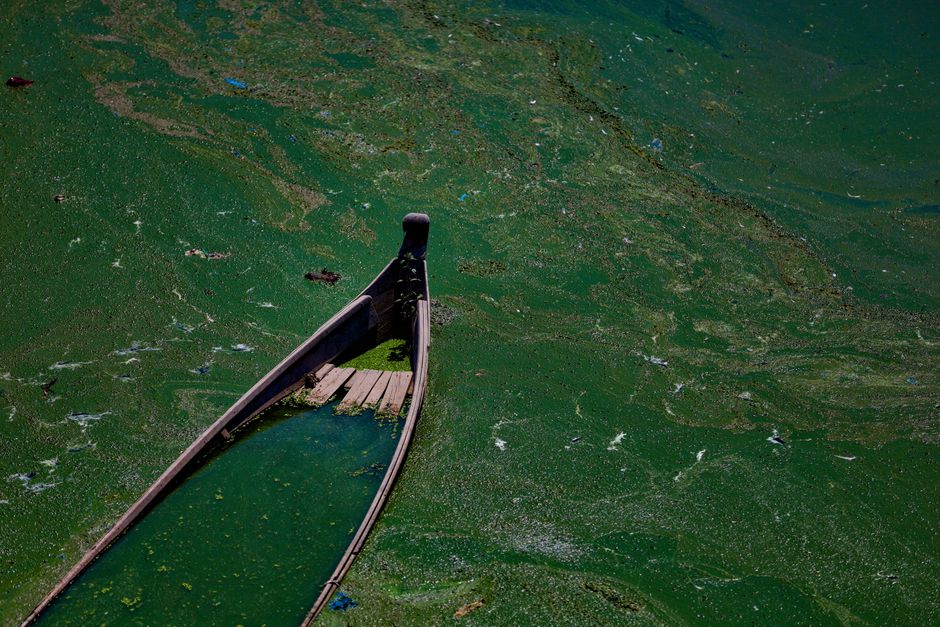
Of 9,479 rated lakes across the 49 states and 2 Canadian provinces, 1,882 grade D or F on EPA nutrient and algae data. These 15 are the bottom of that distribution — not a toxics ranking, and not a day-of swim call.
The 15 lowest-graded lakes
The current floor of the list is Cowley Lake (MN), with phosphorus around 739 µg/L and chlorophyll-a around 344 µg/L. “Dirtiest” here means the lowest combined nutrient–algae grade against EPA National Lakes Assessment ecoregion classes. Secchi clarity is in the table because that is what the water looks like; it is not what the letter scores. The paired national report is Cleanest and Dirtiest Lakes in America 2026.
| Rank | Lake | State | County | Grade | Clarity (ft) | Phosphorus (µg/L) |
|---|---|---|---|---|---|---|
| 1 | Cowley Lake | MN | Hennepin | F | 0.8 | 739 |
| 2 | Alice Lake | MN | Otter Tail | F | 0.8 | 494 |
| 3 | Mccarthy Lake | MN | Dakota | F | 1 | 195 |
| 4 | Goose Lake | MN | Carver | F | 1.2 | 133 |
| 5 | Shoalwater Bay Lake | OR | Klamath | F | — | 215 |
| 6 | Goose Lake | MN | Ramsey | F | 0.7 | 174 |
| 7 | Bois D Arc Lake | AR | Hempstead | F | — | 200 |
| 8 | Hazeltine Lake | MN | Carver | F | 1 | 142 |
| 9 | Ardmore Lake | MN | Hennepin | F | 1.3 | 285 |
| 10 | Augusta Lake | MN | Dakota | F | 0.7 | 148 |
| 11 | Cedar Lake | IA | Linn | F | 0.9 | 257 |
| 12 | Rattlesnake Point Lake | OR | Klamath | F | — | 185 |
| 13 | Mud Lake | MN | Hennepin | F | 0.9 | 150 |
| 14 | Hannen Lake | IA | Benton | F | 1.2 | 141 |
| 15 | Rice Lake | MN | Hennepin | F | 2.3 | 334 |
The live bottom of the distribution is the worst water-quality ranking. 5 of these 15 have a surveyed maximum depth under 25 feet, which is the usual pattern: a small, warm basin sitting in a nutrient-rich watershed.
What actually puts a lake at the bottom
The EPA nutrient-pollution program still names agriculture as the largest source of phosphorus and nitrogen reaching U.S. waters. On this list that usually shows up as a shallow basin, a farmed or urban watershed, and chlorophyll-a high enough that a summer afternoon looks green. The mechanism is in Why Lakes Turn Green:
- External load. Fertilizer, manure, stormwater, and leaking septics wash phosphorus in from the land.
- Internal load. Once the bottom water loses oxygen, sediment releases stored phosphorus back into the water column. The lake fertilizes itself.
- Shallow mixing. Wind stirs the whole water column. There is no cold, isolated hypolimnion to park nutrients in for the summer.
Depth helps on average — that analysis is in Do Deeper Lakes Have Better Water Quality? — but a deep lake with a heavy watershed load still grades poorly. Land use beats bathymetry when the two disagree.
Health risk, stated carefully
Lakes in Poor condition for chlorophyll-a are the ones that most often grow cyanobacteria (blue-green algae). Those organisms can produce cyanotoxins. The EPA CyanoHABs program and the CDC HAB pages are the health authorities: skin irritation, gastrointestinal illness, and — for dogs in particular — a real poisoning risk from licking scum off fur. Both the Minnesota Department of Health and Wisconsin DHS tell people to stay out of water that looks like spilled paint. That advice outranks any letter on this page. See also Algae Blooms Explained and the current algae advisories.
What restoration actually looks like
Buffer strips, cover crops, stormwater ponds, and septic upgrades cut the new phosphorus. Alum treatments can bind the phosphorus already in the sediment, which is why some lakes improve a full letter over a decade of coordinated watershed work and others stall even after the farms clean up. The lakes that are already moving the right way are in Lakes Making a Water-Quality Comeback; the ones sliding the other direction are in The Lakes Where Water Quality Is Slipping.
Frequently Asked Questions
Treat it as a warning, not a day-of test. D and F mean nutrients and algae are in EPA’s Poor condition class for that ecoregion over a typical summer, which raises the odds of murky water and cyanobacteria blooms. Stay out of green scum, keep pets out, and check current beach and harmful-algal-bloom advisories before anyone gets in.
No. The letter is a nutrient-and-algae grade, not a toxics grade. A D or F usually means high phosphorus and chlorophyll-a — green, soupy water — not a Superfund listing. Mercury and PFAS live on a separate fish-consumption advisory. The two can overlap; they are not the same finding.
Yes, but the timeline is years, not a season. Cutting the phosphorus coming in from the watershed is the durable fix. Phosphorus already stored in bottom sediment can keep feeding blooms after the farms and septics are cleaned up. Track the trend on the lake page rather than waiting for the letter to jump overnight.
1,231 graded lakes currently grade D and 651 grade F — 1,882 of the 9,479 graded lakes across the 49 states and 2 Canadian provinces. The continuously updated bottom of the list is at lakequality.org/ranking/worst.
/methodology
Related Articles
Get more lake water-quality guides by email
New water-quality and pollution guides as we publish. No spam, unsubscribe anytime.