Published May 19, 2026
Mercury, PFAS, and the Fish You Shouldn't Eat
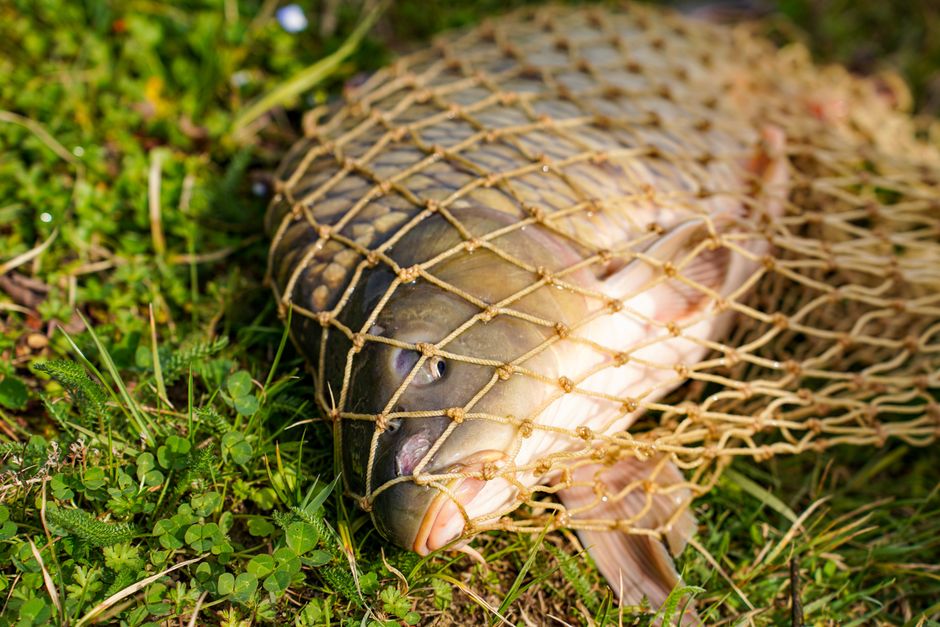
A fish-consumption advisory tells you how often it is safe to eat fish caught from a particular water. Contaminants like mercury, PCBs, and PFAS build up in tissue over years — often in a lake that looks perfectly clean. 3,027 lakes in this dataset of 17,719 monitored waters have documented fish populations; the readings still does not speak to what is in the fillet.
Why a clean-looking lake can still have unsafe fish
A lake's water can be clear and its nutrient readings low while the fish in it still carry a health warning. That is because the two things measure different problems. A water-quality grade is a nutrient-and-algae statement — phosphorus, nitrogen, chlorophyll-a, turbidity. It is blind to mercury, PCBs, and PFAS. A fish-consumption advisory reflects contaminants that have accumulated inside fish tissue over the animal's whole life.
The mechanism is bioaccumulation: a fish absorbs a persistent contaminant faster than its body can shed it, so the concentration in its tissue climbs year after year. Layered on top is biomagnification: each step up the food chain concentrates the contaminant further, so a predator that eats thousands of smaller fish over a decade ends up with far higher levels than any single meal it ate. A trace of mercury in the water becomes a meaningful dose in an old, large walleye or pike. None of this changes how the water looks — which is exactly why you cannot judge fish safety by clarity or by a lake's nutrient readings alone.
The big three: mercury, PCBs, and PFAS
Most fish-consumption advisories in the United States are driven by one of three contaminant families, and each reaches lakes a different way:
- Mercury — the most widespread trigger for advisories. It falls onto watersheds mostly as air pollution from coal combustion and other sources, then bacteria in lake sediment convert it to methylmercury, the form that bioaccumulates in fish. Because it is airborne and global, mercury shows up even in remote lakes far from any factory.
- PCBs (polychlorinated biphenyls) — industrial chemicals banned in the U.S. in the late 1970s but still present in sediments and soils. They are fat-soluble, so they concentrate in the fatty tissue of fish and in bottom-feeding and oily species. Legacy PCB contamination is common in urban and industrial watersheds.
- PFAS (per- and polyfluoroalkyl substances) — the "forever chemicals" from firefighting foam, industrial discharge, and consumer products. They resist breakdown and are increasingly the reason states issue new or stricter fish advisories. PFAS testing in fish is still expanding, so the absence of a PFAS advisory does not always mean a water has been tested for it.
For the underlying science and a national picture of which contaminants drive advisories, the U.S. EPA maintains a fish and shellfish advisory technical program.
How fish-consumption advisories work
A fish-consumption advisory is a recommendation, issued by a state health or environment department, on how many meals of a given fish you can safely eat from a specific water over a set period. Advisories are almost never a blanket "safe" or "unsafe" for a whole lake. Instead they are sliced by species and size, because contaminant levels differ sharply between a small panfish and a trophy predator from the same water.
The guidance is usually expressed as meals per month or per week — for example, "walleye over 20 inches: one meal per month" alongside "bluegill: unlimited." The strictest tier is "do not eat." Crucially, advisories carry separate, tighter limits for children and for people who are pregnant, nursing, or may become pregnant, because methylmercury and PFAS are most harmful to developing brains and to fetal development. A meal frequency that is fine for an adult may be too high for a young child.
Which fish are usually safer to eat
Two rules of thumb cut most of the risk without giving up fishing. First, eat smaller and younger fish. A short-lived fish has had less time to accumulate mercury, so a modest-sized fish almost always tests lower than a trophy of the same species. Second, favor species lower on the food chain. Panfish — bluegill, sunfish, yellow perch, and crappie — sit below the top predators and typically carry far less mercury and PCBs than walleye, northern pike, muskellunge, and large bass.
Preparation helps too, at least for the fat-soluble contaminants. PCBs and some PFAS concentrate in skin, belly fat, and the dark lateral line. Skinning fillets, trimming visible fat, and grilling or broiling on a rack so fat drips away all lower those contaminants. None of that removes mercury, though — mercury is locked in the muscle, so meal-frequency limits are the only real control for it. If you want to line fish selection up against water quality, our fishing and water-quality guide explains how a lake's readings and its fishery relate — and, just as important, where they do not.
Where to check before you eat your catch
Always check two things before keeping fish for the table: the current advisory from your state and the species-and-size detail for the specific water you fished. LakeQuality summarizes fish-population and consumption context on its safe-to-eat pages, which cover the 3,027 lakes in our dataset of 17,719 monitored waters that have documented fish populations. You can also browse species by type to see which lakes hold the fish you target.
For the authoritative, up-to-date limits, go to the primary sources: the federal FDA and EPA advice about eating fish for the general framework, the EPA fish-advisory program for the science, and — most important — your state health department's fish-consumption advisory, which issues the water-specific, species-specific meal limits that actually apply to your catch.
Frequently Asked Questions
Not always. Water clarity tells you about algae and sediment, not about contaminants stored in fish tissue. Mercury, PCBs, and PFAS build up in fish over years and can be high even in a clear, healthy-looking lake. The only way to know how often a species is safe to eat is to check your state health department's fish-consumption advisory for that water.
It is a limit on how often you should eat a given species and size of fish from a specific water — in this case, no more than one standard meal (about 8 ounces uncooked for an adult) in a 30-day period. The limit is set so that contaminant intake stays below levels considered harmful over the long term. Stricter categories exist ("one meal per week," "do not eat"), and separate, tighter limits usually apply to children and to people who are pregnant or may become pregnant.
Smaller, younger fish and species lower on the food chain — panfish such as bluegill, sunfish, and crappie — generally carry less mercury and fewer PCBs than large, long-lived predators like walleye, northern pike, muskellunge, and large bass. Trimming fat and skin before cooking also removes PCBs and PFAS that concentrate in fatty tissue.
No. Cooking does not destroy or remove mercury, which is bound inside the muscle tissue. Trimming skin and fat and choosing cooking methods that let fat drip away can reduce PCBs and some PFAS, but the safest lever is species and size selection plus following your state advisory on meal frequency.
/methodology
Related Articles
Get water-safety guides by email
New fish-advisory, algae, and swimming-safety explainers as we publish. No spam, unsubscribe anytime.