Published August 23, 2026 · Updated August 23, 2026
Lake Water Temperature by Month: How Warm Lakes Get
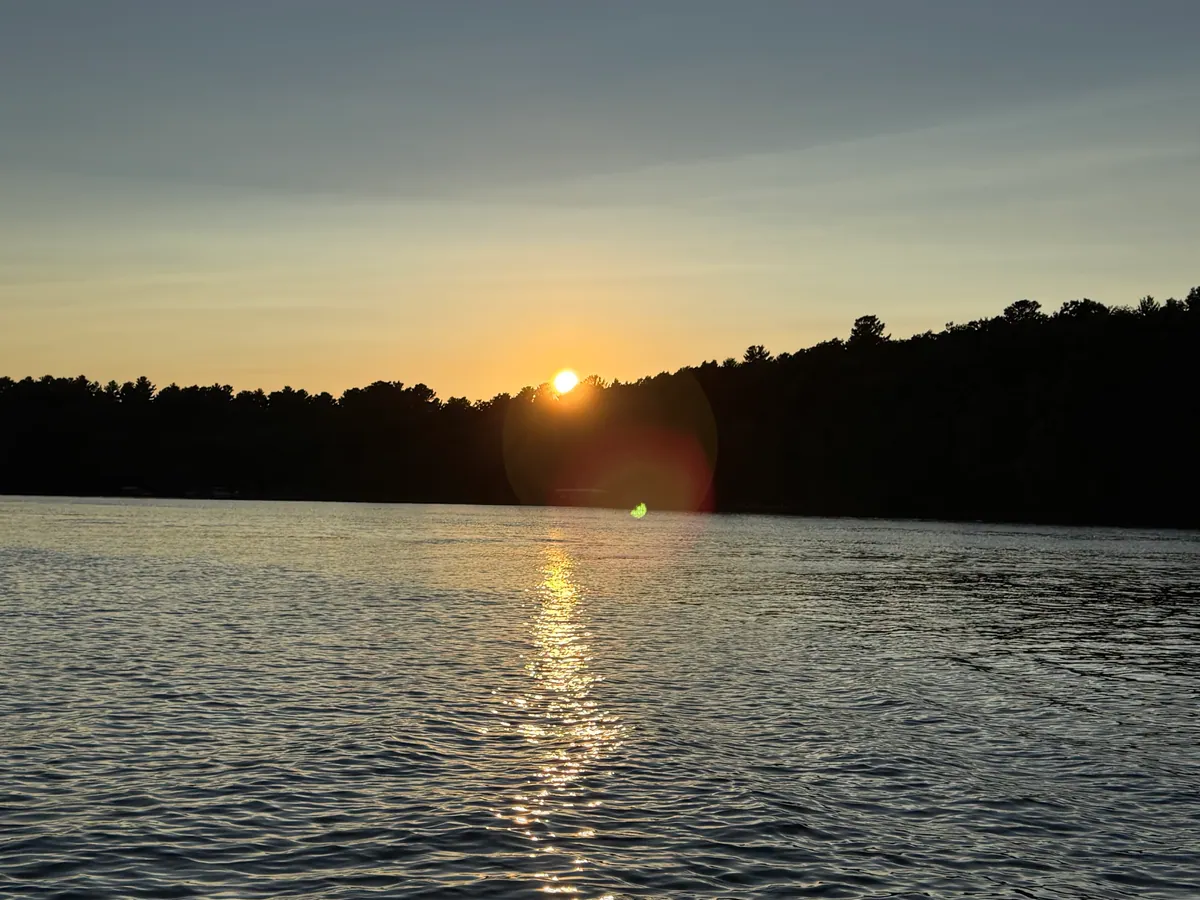
The median lake in this record sits at 75°F through June, July and August. That average hides a 20-degree spread between states — North Dakota lakes typically reach 66°F in summer while Florida lakes hold 86°F.
Typical summer temperature, by state
Each row below is the median of the lakes in that state, and each lake's own figure is the average of its readings in that month across 2010–2026. This is climatology, not a forecast: it answers “how warm is this lake usually in July” rather than “how warm is it right now”. States with fewer than 14 measured lakes are left out — a median of six lakes is an anecdote.
| State | Lakes | Typical summer | Typical July | Warmest month |
|---|---|---|---|---|
| Florida | 939 | 86°F | 87°F | Jul (41% of lakes) |
| Missouri | 149 | 82°F | 84°F | Jul (89% of lakes) |
| Iowa | 141 | 78°F | 81°F | Jul (89% of lakes) |
| Illinois | 90 | 77°F | 78°F | Jul (59% of lakes) |
| Wisconsin | 409 | 74°F | 77°F | Jul (81% of lakes) |
| Minnesota | 1,452 | 72°F | 74°F | Jul (72% of lakes) |
| Michigan | 111 | 67°F | 67°F | Aug (52% of lakes) |
| North Dakota | 105 | 66°F | 69°F | Jul (65% of lakes) |
Coverage follows the monitoring, not the map: the states with thousands of measured lakes are the ones whose agencies sample lakes routinely. Every lake with its own monthly record has a page under lake water temperatures.
The shape of a lake year
There is no single national curve worth printing. A Florida lake moves through a range of about twenty degrees over the year; a Minnesota lake moves through nearly forty and spends part of it under ice. Averaging them produces a line that describes no real lake anywhere. So here are the individual curves for the best-covered states, each with the number of lakes standing behind every month.
| Month | Jan | Feb | Mar | Apr | May | Jun | Jul | Aug | Sep | Oct | Nov |
|---|---|---|---|---|---|---|---|---|---|---|---|
| Typical °F | 37 | 37 | 39 | 47 | 58 | 68 | 74 | 72 | 66 | 56 | 44 |
| Lakes measured | 86 | 85 | 90 | 252 | 1,236 | 1,401 | 1,415 | 1,428 | 1,376 | 547 | 70 |
| Month | Feb | Mar | Apr | May | Jun | Jul | Aug | Sep | Oct |
|---|---|---|---|---|---|---|---|---|---|
| Typical °F | 38 | 43 | 50 | 62 | 72 | 77 | 73 | 69 | 59 |
| Lakes measured | 27 | 36 | 134 | 254 | 358 | 393 | 375 | 234 | 105 |
| Month | Jan | Feb | Mar | Apr | May | Jun | Jul | Aug | Sep | Oct | Nov | Dec |
|---|---|---|---|---|---|---|---|---|---|---|---|---|
| Typical °F | 61 | 65 | 71 | 76 | 81 | 85 | 87 | 87 | 84 | 78 | 71 | 67 |
| Lakes measured | 548 | 693 | 682 | 629 | 673 | 731 | 630 | 741 | 656 | 649 | 623 | 560 |
Read the bottom row before the top one. Months with only a handful of lakes reporting are omitted entirely, and even the months that survive are not sampled evenly — crews are on the water in summer. A northern lake genuinely does sit near freezing under the ice; this record simply is not the evidence for it.
Why a lake warms the way it does
Water absorbs heat far more slowly than land and releases it just as slowly, which is why a lake lags the air by weeks in both directions. Through spring the surface warms while the depths stay cold, and by early summer most lakes deep enough to do so have separated into a warm upper layer floating on a cold lower one. Once that separation sets, the surface can keep climbing while water thirty feet down stays in the fifties.
Size and depth set the pace. A shallow pond tracks the air closely and can swing several degrees in a week; a large, deep basin absorbs an enormous amount of heat before its surface moves at all, then holds that heat into autumn — which is why the warmest month arrives in August rather than July in states whose sample is dominated by big water. The same stratification that governs temperature also governs nutrients, and that side of it is in Do Deeper Lakes Have Better Water Quality?
Warm water matters for more than comfort. Cyanobacteria do best in still, warm, nutrient-rich water, so the weeks a lake spends above the mid-seventies are also its highest-risk weeks for a bloom — the reason advisory season and swimming season are the same season. That mechanism is in Algae Blooms Explained.
Using this to plan a swim
Pick the state row for a rough expectation, then the individual lake for a real one — a deep, spring-fed lake and a shallow one an hour apart are not the same swim in June. Temperature also says nothing about whether the water is clean: for that, read the lake's readings and any current advisory. The state-by-state answer to which month is most comfortable is in Best Month to Swim, by State, the cleanest measured swim water is in Best Lakes for Swimming, and what an advisory actually means is in Is It Safe to Swim in a Lake?
Frequently Asked Questions
Across 3,421 lakes with a monthly temperature record, the median June-to-August surface temperature is 75°F. 2,647 of those lakes average at least 70°F through the summer and 1,781 average at least 75°F. The spread between states is far wider than the spread between summers.
July, in 7 of the 8 states with enough measured lakes to say. The exceptions run a few weeks later: larger and deeper basins hold their heat, so August tops out states where big lakes dominate the sample.
Comfort is personal, but most swimmers find water below about 70°F bracing for anything longer than a quick dip, and 75°F and up comfortable for extended swimming. Below roughly 60°F, cold-water safety matters more than comfort — entry gasp and reduced muscle control are real risks even for strong swimmers.
No, and that distinction matters. These are typical values built from 441,992 monitoring readings taken between 2010 and 2026, so they describe what a lake usually does in a given month rather than what it is doing today. For today, check the nearest gauge or the local forecast.
Because sampling crews work in the open-water season. Most lakes here are measured from May through September and never in January, so the winter columns are drawn from a much smaller and geographically different set of lakes. Each month in the tables shows how many lakes are behind it for exactly that reason.
/methodology
Related Articles
Get swim and water-quality updates by email
New temperature, clarity and algae coverage as we publish. No spam, unsubscribe anytime.