Updated August 2026
Biggest Lake in Montana: Fort Peck Reservoir (246,000 acres)
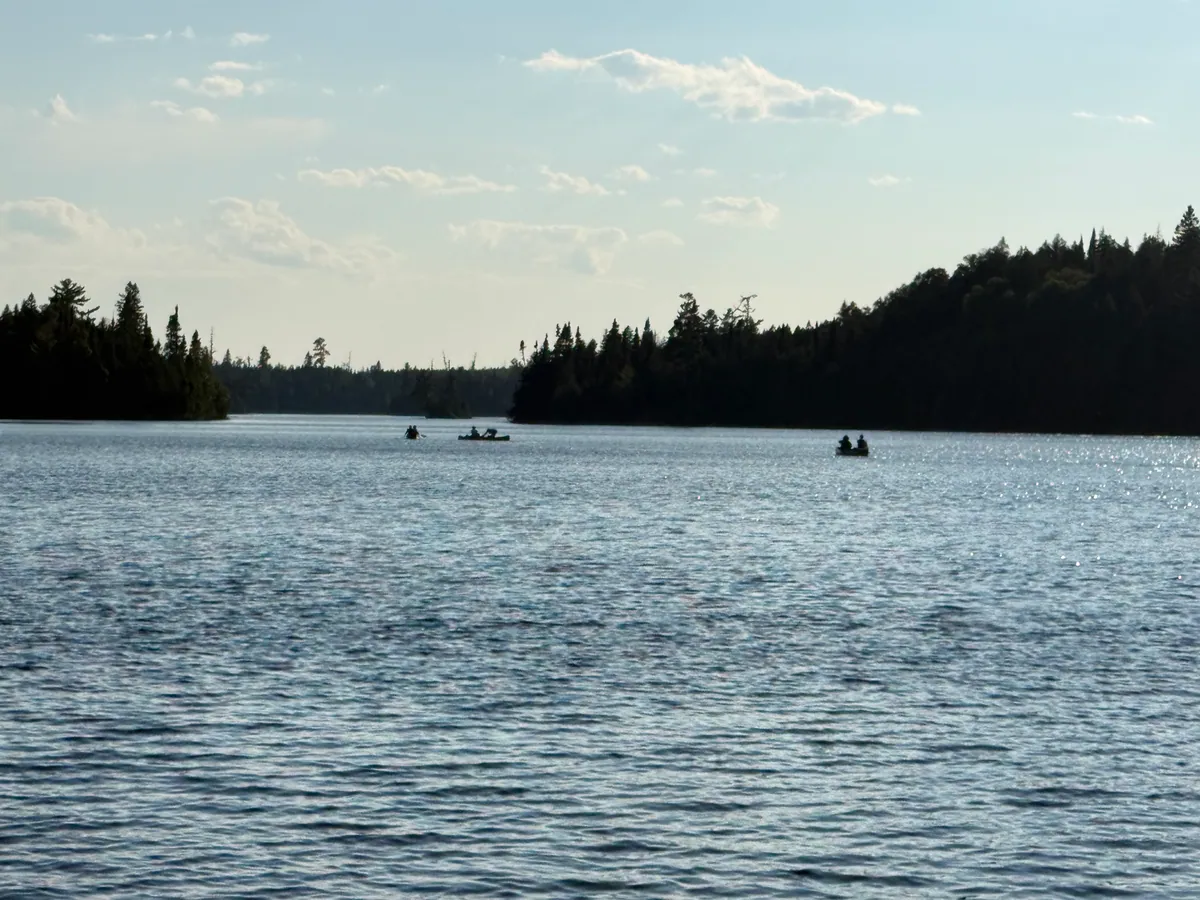
Fort Peck Reservoir is Montana's largest lake per the Montana Fish, Wildlife & Parks. Below: 50 Montana lakes ranked by surface area.
The largest lake in Montana is Fort Peck Reservoir at 246,000 acres , in McCone, Valley, Garfield, Phillips, Fergus, Petroleum County, according to the Montana Fish, Wildlife & Parks.
Fort Peck Reservoir isn't in our water-quality index — we grade lakes with enough EPA Water Quality Portal samples to score, which leaves out many large reservoirs and border waters. The ranking below covers the 50 Montana lakes with nutrient and algae readings, led by Lake Koocanusa.
Source: Montana Fish, Wildlife & Parks (2023 (FWP Statewide Fisheries Management Plan 2023-2026, section 2.31)). The table below ranks the Montana lakes in our own index by surface area.
Reading Montana's size profile
Montana's largest lake by surface area is Lake Koocanusa in Lincoln County, spanning 46,500 acres. Most of Montana's biggest waters are natural basins left by glaciers, with stable shorelines and deep main basins.
Surface area is a poor proxy for water quality on its own — a large lake can hold a clean, deep core and a nutrient-loaded bay at the same time. Each lake below links to its full page with nutrient readings, clarity, depth, and EPA impairment status. Area figures come from state DNR surveys and the USACE National Inventory of Dams; water-quality readings come from EPA and state monitoring data.
The 50 biggest lakes in Montana by surface area
| # | Lake | County | Surface area | Max depth |
|---|---|---|---|---|
| 1 | Lake Koocanusa | Lincoln | 46,500 acres | - |
| 2 | Hungry Horse Reservoir | Flathead | 23,596 acres | 490 ft |
| 3 | Lake Elwell | Liberty | 13,072 acres | 140 ft |
| 4 | Hebgen Lake | Gallatin | 12,407 acres | 70 ft |
| 5 | Medicine Lake | Sheridan | 9,017 acres | - |
| 6 | Noxon Reservoir | Sanders | 7,851 acres | 156 ft |
| 7 | Clark Canyon Reservoir | Beaverhead | 6,606 acres | - |
| 8 | Lake Frances | Pondera | 5,252 acres | 43 ft |
| 9 | Fresno Reservoir | Hill | 5,007 acres | 50 ft |
| 10 | Holter Reservoir | Lewis and Clark | 4,550 acres | - |
| 11 | Lima Reservoir | Beaverhead | 4,373 acres | - |
| 12 | Saint Mary Lake | Glacier | 3,964 acres | - |
| 13 | Ennis Lake | Madison | 3,758 acres | 20 ft |
| 14 | Lake Bowdoin | Phillips | 3,659 acres | - |
| 15 | Freezeout Lake | Teton | 3,013 acres | - |
| 16 | Upper Red Rock Lake | Beaverhead | 2,947 acres | - |
| 17 | Georgetown Lake | Deer Lodge | 2,858 acres | - |
| 18 | Ashley Lake | Flathead | 2,852 acres | - |
| 19 | Bynum Reservoir | Teton | 2,819 acres | - |
| 20 | Cabinet Gorge Reservoir | Sanders | 2,789 acres | 49 ft |
| 21 | Benton Lake | Cascade | 2,700 acres | - |
| 22 | Big Lake | Stillwater | 2,583 acres | - |
| 23 | Lower Red Rock Lake | Beaverhead | 2,218 acres | - |
| 24 | Lower Saint Mary Lake | Glacier | 2,179 acres | - |
| 25 | Tongue River Reservoir | Big Horn | 2,158 acres | 54 ft |
| 26 | Deadmans Basin Reservoir | Wheatland | 2,008 acres | - |
| 27 | Wild Horse Lake | Petroleum | 1,929 acres | - |
| 28 | Bowman Lake | Flathead | 1,737 acres | - |
| 29 | Pablo Reservoir | Lake | 1,637 acres | - |
| 30 | McGregor Lake | Flathead | 1,525 acres | - |
| 31 | Kingsbury Lake | Chouteau | 1,464 acres | - |
| 32 | Duck Lake | Glacier | 1,449 acres | 50 ft |
| 33 | Lake Sherburne | Glacier | 1,399 acres | 60 ft |
| 34 | Gibson Reservoir | Teton | 1,281 acres | 160 ft |
| 35 | Homestead Lake | Sheridan | 1,262 acres | - |
| 36 | Dry Lake Unit | Phillips | 1,224 acres | - |
| 37 | Ninepipe Reservoir | Lake | 1,214 acres | - |
| 38 | Big Lake | Chouteau | 1,213 acres | - |
| 39 | Bull Lake | Lincoln | 1,202 acres | 60 ft |
| 40 | Aloe Lake | Toole | 1,180 acres | - |
| 41 | Logging Lake | Flathead | 1,127 acres | - |
| 42 | Weigand Reservoir | Phillips | 1,097 acres | - |
| 43 | Cooney Reservoir | Carbon | 1,078 acres | - |
| 44 | Alkali Lake | Pondera | 1,012 acres | - |
| 45 | Martinsdale Reservoir | Wheatland | 989 acres | - |
| 46 | Upper Waterton Lake | Glacier | 988 acres | - |
| 47 | Big Salmon Lake | Flathead | 973 acres | - |
| 48 | Ruby River Reservoir | Madison | 949 acres | 28 ft |
| 49 | Lake Como | Ravalli | 912 acres | 93 ft |
| 50 | Quartz Lake | Flathead | 879 acres | - |
Get updates on Montana's largest lakes
New water-quality readings for Montana lakes as Montana DEQ publishes them. Unsubscribe anytime.
Frequently Asked Questions
What is the largest lake in Montana?
Fort Peck Reservoir, at 246,000 acres, in McCone, Valley, Garfield, Phillips, Fergus, Petroleum County. Source: Montana Fish, Wildlife & Parks, 2023 (FWP Statewide Fisheries Management Plan 2023-2026, section 2.31).
How is lake surface area measured?
Surface area comes from state DNR lake surveys and, for reservoirs, US Army Corps of Engineers (USACE) National Inventory of Dams records. Area is reported in acres at normal pool level. Reservoirs rise and fall with management and drought, so their listed area is the long-term normal rather than a single-day reading.
Are Montana's largest lakes natural or reservoirs?
Of the top 50 Montana lakes by area, 5 sit on a dammed river (reservoirs) and 45 are natural basins. Glacial states (MN, WI, MI, NY) skew natural; plains and southern states (MO, IA, ND, OH) skew toward reservoirs built for water supply, flood control, and recreation.
Do larger lakes have better water quality?
Not reliably. Quality varies more within a big lake than between lakes — a large lake can have a clean, deep main basin and a murky, algae-prone bay fed by a tributary, so one reading can mask wide swings. Depth, watershed land use, and how fast the lake flushes matter far more than raw surface area.
How big is the typical Montana lake in this ranking?
Across the top 50 Montana lakes by surface area, the median is 2,008 acres (Deadmans Basin Reservoir). This list is biased toward the biggest waters; the typical Montana lake is far smaller.
Where to stay near Montana's largest lakes
Planning a trip? Jump to live cabin, resort, and hotel availability near Montana's biggest lakes.
- Lake Koocanusa · Lincoln CountyCabins & hotels near Lake Koocanusa →
- Hungry Horse Reservoir · Flathead CountyCabins & hotels near Hungry Horse Reservoir →
- Lake Elwell · Liberty CountyCabins & hotels near Lake Elwell →
- Hebgen Lake · Gallatin CountyCabins & hotels near Hebgen Lake →
- Medicine Lake · Sheridan CountyCabins & hotels near Medicine Lake →