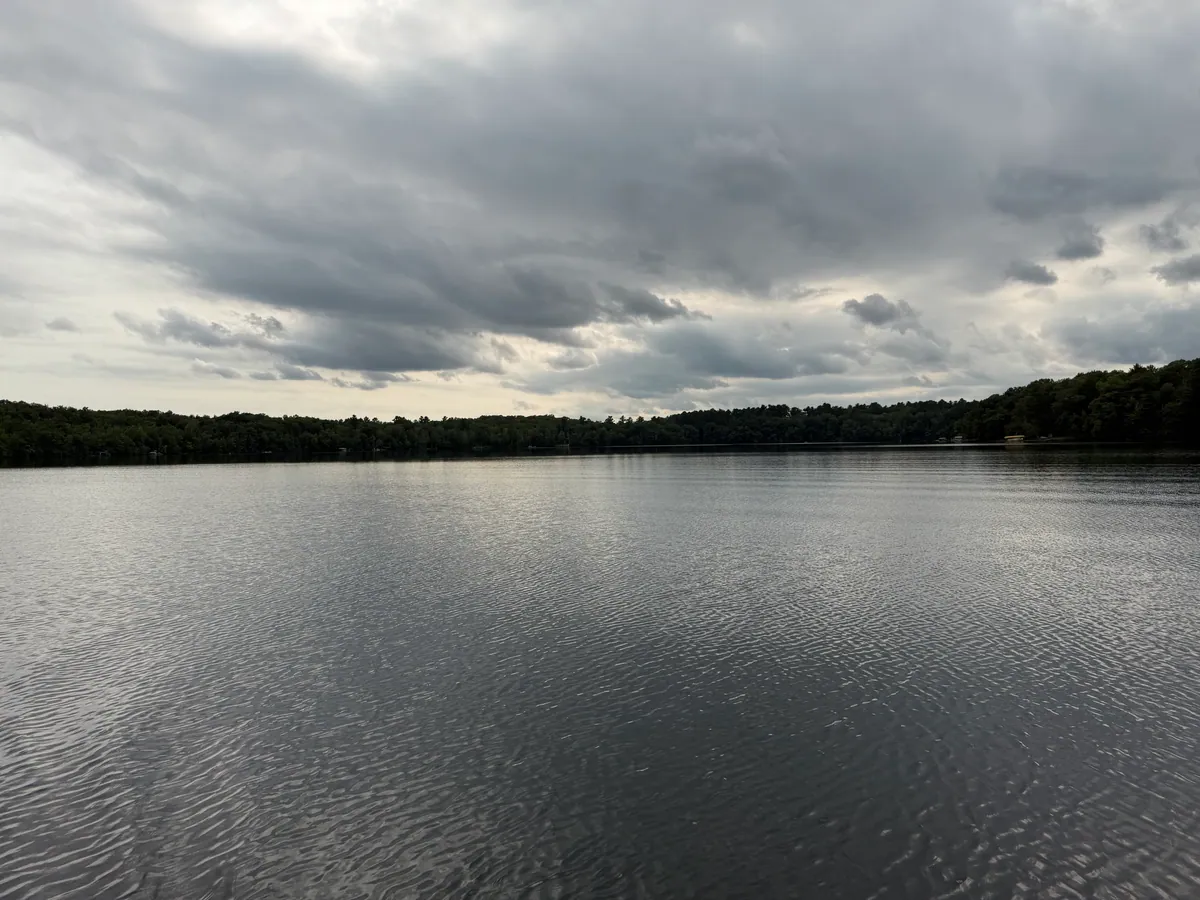
Updated August 2026
Deepest Lake in Vermont: Lake Willoughby (308 ft)
Lake Willoughby is Vermont's deepest lake at 308 ft, per the Vermont Department of Forests, Parks and Recreation (Willoughby State Forest). Lake Champlain reaches about 400 ft but is shared with New York and Quebec, so it is not a lake entirely within Vermont. No Vermont lake has a surveyed maximum depth on record.
Bathymetric surveys are published state by state, so measured depths exist for some states and not others. Browse all Vermont lakes for the water-quality data that does exist, or open Lake Willoughby's lake page.
Sources and method
- Deepest lake: Lake Willoughby, 308 ft, per the Vermont Department of Forests, Parks and Recreation (Willoughby State Forest), 2026-07-30. Lake Willoughby lake page
Get updates on Vermont's deepest lakes
New water-quality readings for Vermont lakes as Vermont DEC publishes them. Unsubscribe anytime.
Frequently Asked Questions
What is the deepest lake in Vermont?
Lake Willoughby, at 308 ft, in Orleans County. Lake Champlain reaches about 400 ft but is shared with New York and Quebec, so it is not a lake entirely within Vermont. Source: Vermont Department of Forests, Parks and Recreation (Willoughby State Forest), 2026-07-30.
How are lake depths measured?
Maximum depth is the deepest point at full-pool water level, from state agency bathymetric surveys and, for reservoirs, dam-design records. The ranking uses surveyed depths only, never modeled estimates. Everyday water level can sit below the surveyed figure during drawdowns or drought. Mean depth, the average across the whole basin, is listed where a survey recorded it.
Why are some Vermont lakes so much deeper than others?
Lake depth depends on how the lake formed. Glacial lakes (common in MN, WI, MI, NY) were carved by ice sheets and can exceed 200 ft. Reservoir lakes (common in IA, MO, OK, KS) are shaped by river valley depth at the dam site — typically 50-150 ft at the dam, much shallower upstream. Flooded mine pits can be deeper still. Oxbow lakes and pothole lakes formed by river meandering or glacial pitting tend to be shallower, usually under 30 ft.
Does deeper mean cleaner?
Not directly, but deeper lakes tend to be cleaner on average. Depth creates thermal stratification in summer, isolating cold deep water from surface algal blooms. Deep lakes also resist nutrient resuspension from wind-driven sediment mixing. That said, many deep lakes still suffer from impairment if the watershed loads heavy phosphorus — each lake's page carries its nutrient readings and EPA impairment status.