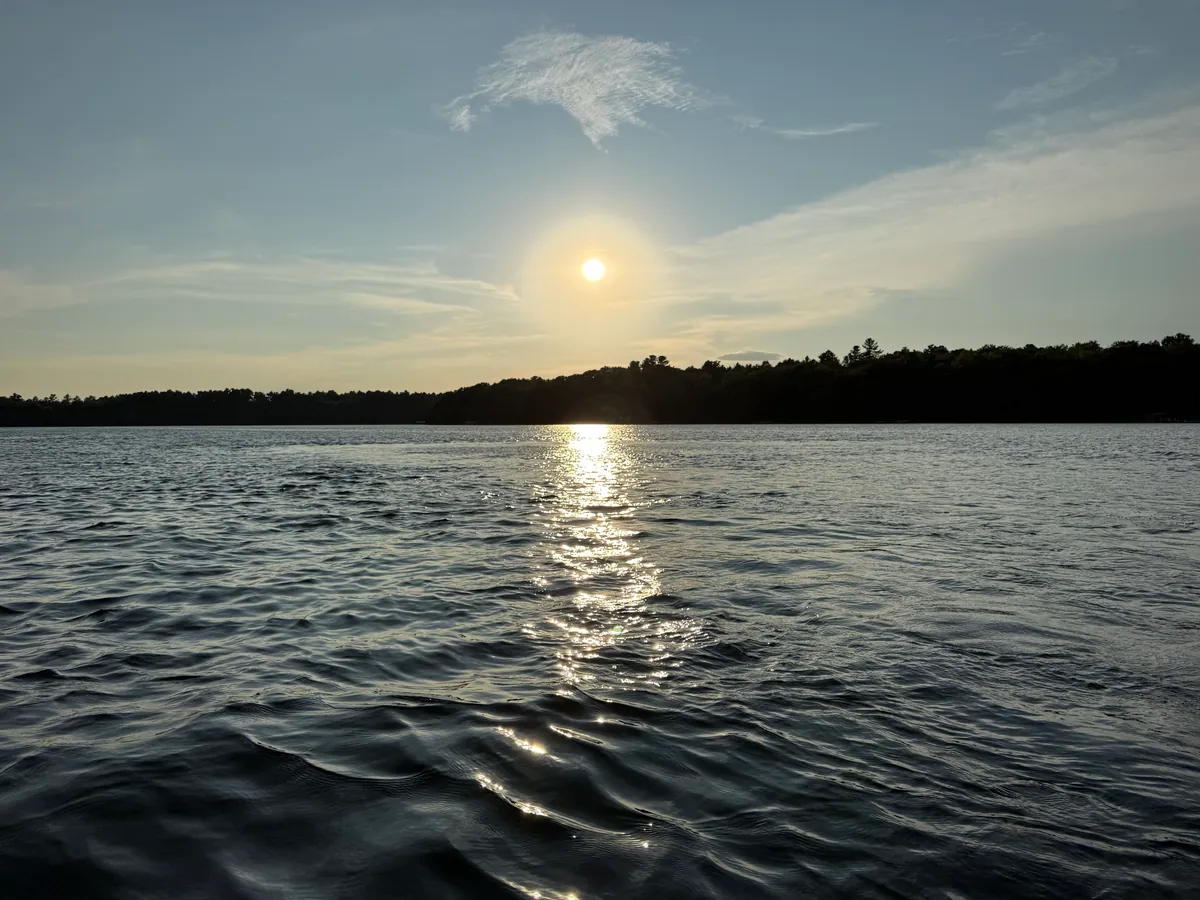
When Does Bad Axe Lake Freeze? Typical Ice-In Nov 22, Ice-Out Apr 20
Bad Axe Lake in Hubbard County, Minnesota usually freezes over around Nov 22, and usually has ice-out around Apr 20, based on Minnesota DNR ice observations recorded between 1991-2024. That works out to roughly 216 days of open water a year. These are typical dates across many winters, not a forecast — individual years swing by weeks in either direction.
Ice record for Bad Axe Lake
| Typical freeze-up (ice-in) | Nov 22 |
| Typical ice-out | Apr 20 |
| Earliest freeze-up on record | Nov 3, 1991 |
| Latest freeze-up on record | Dec 9, 2016 |
| Earliest ice-out on record | Mar 19, 2024 |
| Latest ice-out on record | May 13, 2014 |
| Open-water season | ~216 days |
| Winters observed | 108 |
| Location | Hubbard County, Minnesota |
These are dates, not an ice-safety reading
A typical freeze-up date tells you when Bad Axe Lake has usually iced over — it does not tell you the ice is safe, and we hold no thickness measurement for this or any lake. The Minnesota DNR is explicit that no ice is ever completely safe: thickness varies across a single lake, and current, springs, aerators, and insulating snow all weaken it. Ice that held a truck last week may not hold a person today.
Read the ice-thickness guidelines before going out, and check current conditions with the Minnesota DNR ice-safety page and local bait shops, which track conditions lake by lake.
How much the timing varies
Ice-out on Bad Axe Lake has landed as early as Mar 19, 2024 and as late as May 13, 2014 — a spread of weeks around the Apr 20 median. Freeze-up has ranged from Nov 3, 1991 to Dec 9, 2016. That year-to-year swing is why a median date is a planning tool, not a schedule. Freeze-up is driven by accumulated cold after the lake turns over in fall; ice-out by late-winter air temperature, sun angle, and how much snow sits on top of the ice reflecting it. Bad Axe Lake carries an overall water-quality grade of — — the full breakdown is on the lake report.
Source: Minnesota DNR Climate Office ice-in / ice-out records, observations from 1991-2024.
Watch Bad Axe Lake water quality
Get an email when the clarity or algae readings change. Unsubscribe anytime.