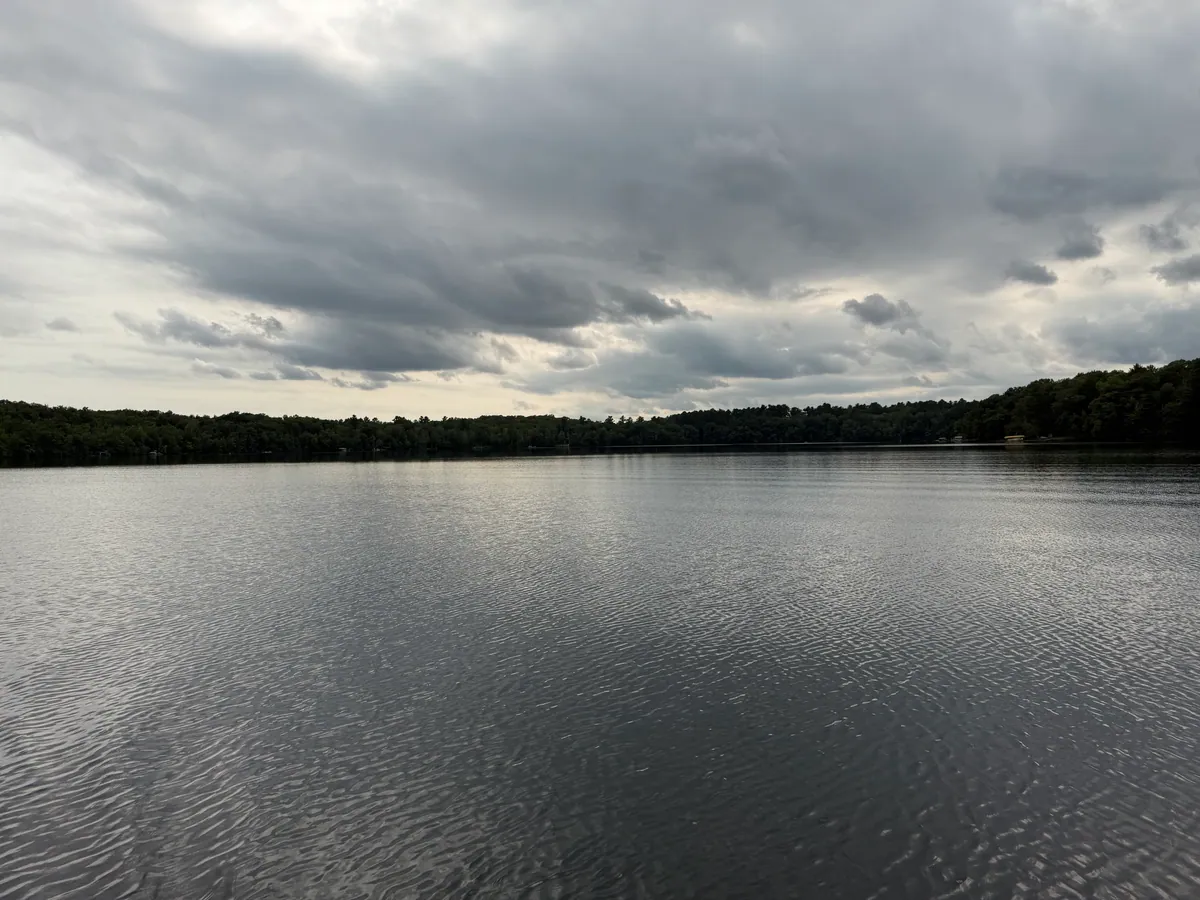
Updated August 2026 · All 4 lakes with a surveyed depth
Deepest Lake in Massachusetts: Quabbin Reservoir (151 ft)
Quabbin Reservoir is Massachusetts's deepest lake at 151 ft, per the Massachusetts Department of Conservation and Recreation (DCR), Division of Water Supply Protection. Mapped and ranked below: the 4 deepest of 4 Massachusetts lakes with a surveyed maximum depth.
Top 4 Deepest Lakes in Massachusetts (by max depth)
| # | Lake | County | Max depth | Mean depth | Surface area |
|---|---|---|---|---|---|
| 1 | College Pond | Plymouth | 24 ft | — | 47 ac |
| 2 | Althea Lake | Middlesex | 15 ft | — | 42 ac |
| 3 | Benedict Pond | Berkshire | 8 ft | — | 37 ac |
| 4 | Lake Nippenicket | Plymouth | 6 ft | — | 375 ac |
Sources and method
- Max and mean depth: state natural-resources agency lake surveys and USACE National Inventory of Dams reservoir records. Surveyed depths only; modeled estimates are never ranked. A dash means the survey did not record a mean.
- Deepest lake: Quabbin Reservoir, 151 ft, per the Massachusetts Department of Conservation and Recreation (DCR), Division of Water Supply Protection, 2026-07-30. Quabbin Reservoir lake page (its record carries no surveyed depth, so it is not in the table)
- Readings: clarity, phosphorus and chlorophyll-a from the agency's own sampling, shown as reported. Depth is not a water-quality reading.
- Map pins: the 4 table rows with surveyed coordinates. No other lakes are plotted.
Get updates on Massachusetts's deepest lakes
New water-quality readings for Massachusetts lakes as MassDEP publishes them. Unsubscribe anytime.
Frequently Asked Questions
What is the deepest lake in Massachusetts?
Quabbin Reservoir, at 151 ft, in Hampshire, Worcester, Franklin County. Source: Massachusetts Department of Conservation and Recreation (DCR), Division of Water Supply Protection, 2026-07-30.
How are lake depths measured?
Maximum depth is the deepest point at full-pool water level, from state agency bathymetric surveys and, for reservoirs, dam-design records. The ranking uses surveyed depths only, never modeled estimates. Everyday water level can sit below the surveyed figure during drawdowns or drought. Mean depth, the average across the whole basin, is listed where a survey recorded it.
Why are some Massachusetts lakes so much deeper than others?
Lake depth depends on how the lake formed. Glacial lakes (common in MN, WI, MI, NY) were carved by ice sheets and can exceed 200 ft. Reservoir lakes (common in IA, MO, OK, KS) are shaped by river valley depth at the dam site — typically 50-150 ft at the dam, much shallower upstream. Flooded mine pits can be deeper still. Oxbow lakes and pothole lakes formed by river meandering or glacial pitting tend to be shallower, usually under 30 ft.
Does deeper mean cleaner?
Not directly, but deeper lakes tend to be cleaner on average. Depth creates thermal stratification in summer, isolating cold deep water from surface algal blooms. Deep lakes also resist nutrient resuspension from wind-driven sediment mixing. That said, many deep lakes still suffer from impairment if the watershed loads heavy phosphorus — each lake's page carries its nutrient readings and EPA impairment status.
What's the average depth of Massachusetts lakes in this ranking?
Across the 4 deepest Massachusetts lakes, the average maximum depth is 13 ft and the median is 8 ft (Benedict Pond). This is the top of 4 lakes with a surveyed depth, so it is biased toward deep lakes; the typical Massachusetts lake is shallower.
Where to stay near Massachusetts's deepest lakes
Planning a trip? Jump to live cabin, resort, and hotel availability near Massachusetts's deepest lakes.