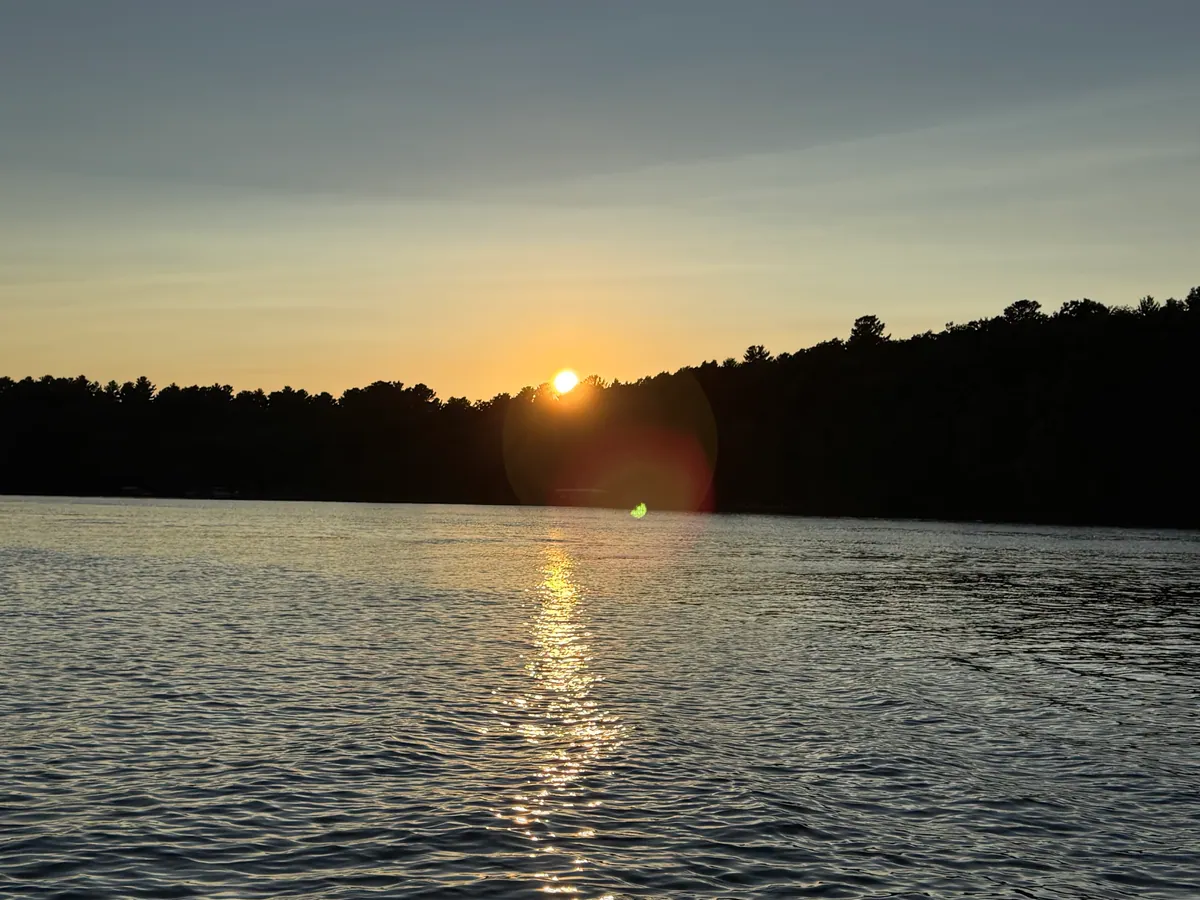
East Battle Lake vs Pelican Lake
Water quality, depth, fish species, and recreation comparison.
East Battle Lake and Pelican Lake read the same on nutrients and algae. Both are in Otter Tail County, Minnesota.
East Battle Lake and Pelican Lake are both in Minnesota — a same-state head-to-head where the comparison comes down to lake-specific differences in depth, watershed, and monitoring history rather than the broader state-level water-quality regime. The readings are close: East Battle Lake and Pelican Lake sit within a narrow band of each other on phosphorus, chlorophyll-a and clarity. The per-parameter table below shows where the small differences actually live.
With readings this close, the choice between the two lakes turns on non-water-quality factors: depth, fish species, public access, distance from home. The per-lake pages below cover all of those.
East Battle Lake
Good clarity, visible to about 13.1 ft.
Pelican Lake
Crystal clear, you can see 16.4 ft down.
Side-by-Side Metrics
| Metric | East Battle Lake | Pelican Lake |
|---|---|---|
| Water Clarity | 13.1 ft | 16.4 ft Better |
| Phosphorus | 12 µg/L Better | 15 µg/L |
| Chlorophyll-a (Algae) | 4.2 µg/L | 3 µg/L Better |
| Maximum Depth | 87 ft Better | 55 ft |
| Surface Area | 1,978 acres | 3,962 acres |
| Public Access | Yes | Yes |
| Fish Species | 16 | 20 Better |
| Trophic State | mesotrophic | mesotrophic |
A green ✓ marks the better value for that metric (lower phosphorus / chlorophyll = cleaner; higher Secchi / depth / species count = better). Surface area and trophic state carry no tick — a bigger lake is not a better lake.
Swap a lake
Compare East Battle Lake or Pelican Lake against a different lake.
Verdict
Both lakes earn the same Grade A. The tiebreakers come down to clarity (East Battle Lake: 13.1 ft, Pelican Lake: 16.4 ft) and what you want from the lake. East Battle Lake has fewer fish species than Pelican Lake.
Source: EPA National Aquatic Resource Surveys, 2026.