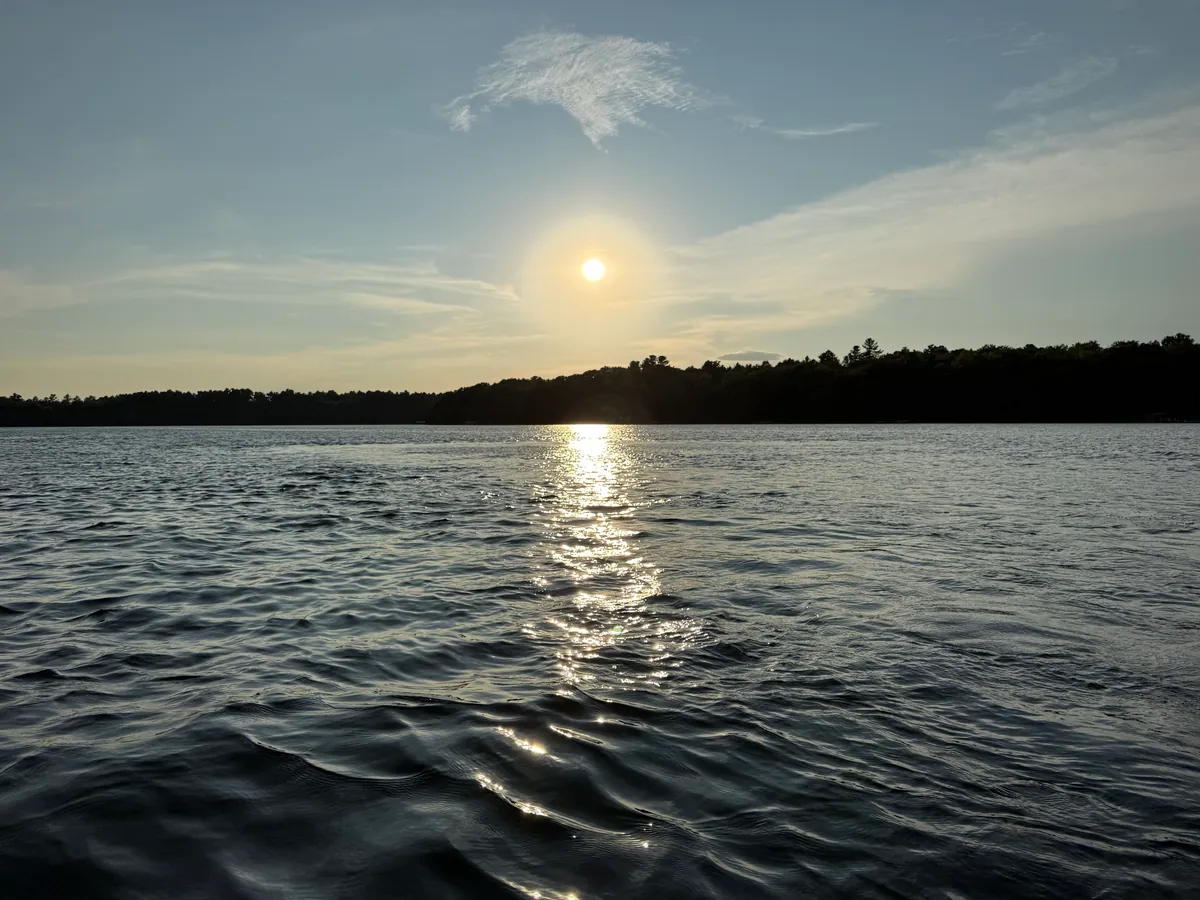
Why Are Some Lakes Green?
Lakes turn green when algae populations bloom — usually because excess phosphorus (from runoff or fertilizer), warm water, and calm conditions stack up to fuel rapid algae growth. Most green color is harmless plant chlorophyll. But blue-green algae (cyanobacteria) can produce dangerous toxins. Color alone is not enough to tell them apart — but tea/brown water (from natural tannins) is fine, while pea-soup or blue-green-paint water is a warning sign.
The four colors of green water
Green is not one thing. Lakes can look green for very different reasons:
- Pale jade green — Often from suspended marl (calcium carbonate) in hard-water lakes. Harmless. Common in Wisconsin's Northwoods.
- Olive green / yellow-green — Moderate algae, mostly harmless green algae and diatoms. Normal late-summer color in moderately enriched lakes.
- Bright green / pea soup — Heavy algae bloom. Could be plant algae OR cyanobacteria. Treat as potentially toxic.
- Blue-green / turquoise streaks or scum — Cyanobacteria bloom. Avoid the water. Keep dogs out.
What drives green water
The single biggest driver is phosphorus enrichment. Lakes with phosphorus above 30 µg/L are at elevated risk of green water in late summer; above 60 µg/L is essentially guaranteed.
Other factors: warm temperatures (algae double their populations every 1-2 days above 75°F), calm wind (lets cyanobacteria float to the surface and concentrate), shallow water (warms faster), and recent rain (washes nutrients in).
Tea-colored water is fine
Many northern lakes have brownish or tea-colored water from natural tannins draining out of bog and tamarack forests. This is sometimes called "bogwater" or "stained water." It looks dark but is chemically clean — no algae issue. Lake Itasca and many Boundary Waters lakes have this character.
When to worry
Avoid swimming if the water has visible green scum, blue-green streaks, or floating mats. Avoid letting pets in or near. If you can't see your hand at 6 inches deep in a normally-clear lake, that is a sudden algae bloom — leave. Check the LakeQuality grade and chlorophyll-a level before planning a trip.
Use the data on LakeQuality
Get lake grades by email
New grades, clarity readings, and algae advisories as samples come in. Unsubscribe anytime.